Anouncement

Anouncement
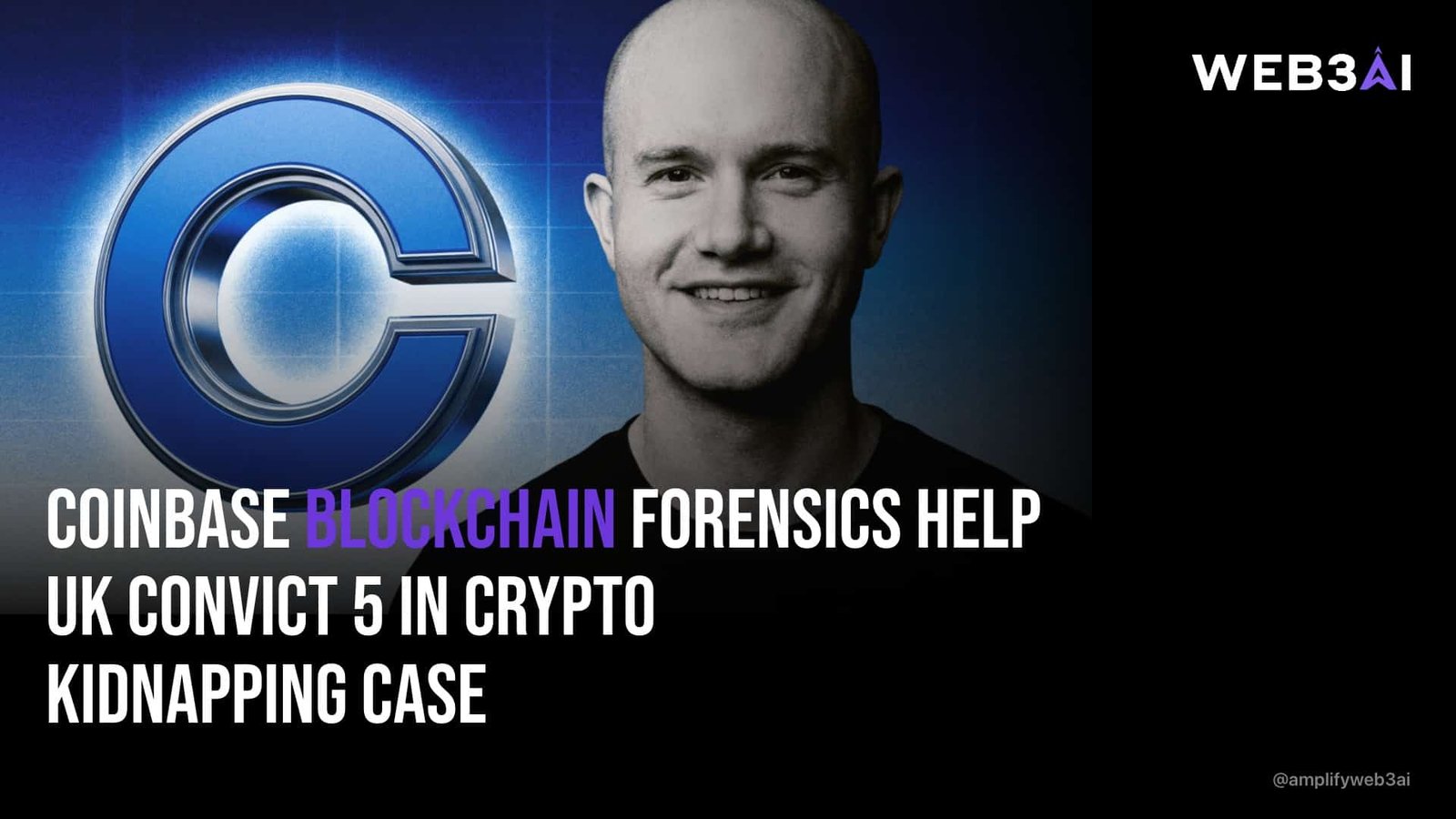

The recent UK crypto kidnapping convictions have sent a stark warning through the global digital asset community — owning cryptocurrency is no longer just a financial risk, it is increasingly a personal safety one. A gang of criminals in the United Kingdom was convicted after abducting a Coinbase user, torturing him, and forcing him to transfer his crypto holdings under duress. This case is not an isolated incident; it is part of a deeply troubling pattern of violent crime targeting visible crypto holders worldwide.
According to reporting by BBC News, the gang identified their victim specifically because of his known involvement with cryptocurrency, underscoring how digital wealth — when visible or poorly protected — can make individuals targets in the physical world. The intersection of blockchain transparency and real-world violence is a conversation the crypto industry can no longer afford to ignore.
In this post, we break down what happened in this UK case, why these crimes are rising, and most importantly, what steps every crypto holder can take to reduce their exposure to this growing threat.
The convicted gang targeted a man known to hold significant cryptocurrency through his Coinbase account. The criminals abducted him, subjected him to violent coercion, and forced transfers of his digital assets before he was eventually freed. UK courts delivered convictions across multiple defendants, marking one of the most high-profile crypto-motivated violent crime cases the country has seen.
What made this case particularly chilling was the precision of the targeting. The gang did not stumble upon a victim at random — they researched him, identified his holdings, and planned the abduction deliberately. This level of premeditation signals that crypto kidnapping has evolved from opportunistic street crime into something far more calculated and dangerous.
Investigators found that the perpetrators used a combination of social media research, community knowledge, and possibly leaked data to identify the victim as a high-value target. The case highlights a brutal truth: in the age of public blockchain wallets and social media oversharing, your wealth can be reverse-engineered by bad actors with enough motivation.
The UK crypto kidnapping convictions are not happening in a vacuum. Across the globe — from Southeast Asia to South America to Western Europe — there has been a documented rise in violent crimes specifically targeting cryptocurrency holders. The reasons are structural, and they are worth understanding deeply.
Cryptocurrency, by design, is pseudonymous and often irreversible. Once a forced transfer is made, there is no chargeback, no fraud department to call, no bank freeze. This makes crypto an attractive target for criminals who understand that a successful theft — even under duress — is almost impossible to reverse. Unlike stealing a car or raiding a bank account, forcing someone to send Bitcoin or Ethereum leaves the thief with assets that are extraordinarily difficult to trace or recover.
Additionally, the bull market cycles that drive crypto into mainstream headlines also broadcast the existence of newly wealthy holders. When Bitcoin hits all-time highs and influencers parade their portfolio gains on social media, it creates a visible map of potential targets for those willing to use violence. The crypto kidnapping problem is, in part, a visibility problem.
Pro Tip: Never publicly disclose specific portfolio sizes, wallet addresses, or exchange accounts on social media — even casually. Criminals actively monitor crypto communities for high-value targets.
One of the most urgent questions raised by the UK crypto kidnapping convictions is how perpetrators identify their victims in the first place. In some cases, data breaches at major exchanges have leaked customer information — names, addresses, and even approximate holdings — onto the dark web. Coinbase itself suffered a significant data breach disclosed in 2025, in which insider employees sold customer data to external parties.
This is a deeply uncomfortable reality for an industry built on trustless, decentralised systems. The weakest link in crypto security is often not the blockchain — it is the centralised company that holds your KYC data, your transaction history, and sometimes your physical address. When that data leaks, it does not just enable phishing emails; in worst-case scenarios, it enables physical crime.
Understanding the evolving threat landscape is essential. For a broader look at how criminal tactics targeting crypto users have changed, explore this detailed breakdown of how crypto scams are evolving and what every holder needs to know. Awareness of digital threats is the first layer of any meaningful personal security strategy.
The UK crypto kidnapping convictions are a call to action. Personal safety in the crypto age requires what security professionals call “operational security” — or OPSEC. This is not paranoia; it is practical, layered protection that reduces your profile as a target.
Start with your digital footprint. Conduct a simple audit of what is publicly visible about you online. Are your wallet addresses linked to your real name anywhere? Have you ever posted screenshots of your portfolio? Do crypto forums or Discord servers list you as a significant holder? Each piece of information, harmless in isolation, can be assembled into a detailed profile by a motivated criminal.
For a comprehensive guide on locking down your digital assets and reducing your on-chain exposure, the team at amplifyweb3.ai has assembled a thorough resource on Web3 security best practices every holder should implement today. These steps apply whether you hold $500 or $500,000 in digital assets.
Pro Tip: Consider spreading holdings across multiple wallets and exchanges. No single account should represent your entire crypto net worth — this limits damage from both digital breaches and physical coercion events.
The UK crypto kidnapping convictions are significant not just because they resulted in prison sentences, but because they demonstrate that law enforcement is developing the capability to investigate and prosecute crypto-motivated violent crime. UK police worked alongside financial investigators to trace the coerced transfers, identify wallet movements, and build a case that stood up in court.
Regulators across Europe are also beginning to treat crypto-related violent crime as part of their broader anti-money laundering and consumer protection frameworks. The Financial Conduct Authority (FCA) in the UK has been tightening its oversight of crypto businesses, and part of that mandate includes ensuring that exchanges have robust data protection practices that do not inadvertently create physical security risks for customers.
If you are new to crypto and want to understand the broader ecosystem before diving deeper into security considerations, start with a foundational overview of what cryptocurrency is and how it actually works. Building knowledge from the ground up is the most empowering thing any holder can do.
Perhaps the most important takeaway from the UK crypto kidnapping convictions is cultural, not technical. The crypto community has long celebrated transparency — public wallets, on-chain proof of holdings, influencer portfolio reveals. But this culture of visibility, while empowering in some ways, has a dangerous shadow side that this case has now thrown into sharp relief.
Real-world discretion is not weakness. It is wisdom. The wealthiest traditional finance players — hedge fund managers, private equity partners — do not broadcast their net worth on Twitter or join public forums discussing exactly how much they hold. The crypto community would benefit enormously from adopting similar norms of financial privacy, not out of shame, but out of simple, practical safety.
The technology will continue to evolve. Zero-knowledge proofs, privacy coins, and stealth addresses are all tools that can reduce on-chain visibility over time. But until those tools are mainstream, the most effective protection remains behavioural: share less, secure more, and treat your crypto holdings the same way you would treat any other significant financial asset — with care, discretion, and appropriate caution.
The UK crypto kidnapping convictions involved a criminal gang that targeted a Coinbase user, abducted him, subjected him to violent coercion, and forced him to transfer his cryptocurrency holdings. The gang was subsequently convicted by UK courts in one of the most high-profile cases of crypto-motivated violent crime in the country’s history.
Investigators believe the perpetrators used a combination of social media intelligence, community knowledge, and possibly data obtained through exchange data breaches to identify their victim as a high-value crypto holder. This underscores the danger of publicly disclosing cryptocurrency holdings on social platforms or within public communities.
Yes. While precise global statistics are difficult to compile, security researchers and law enforcement agencies across multiple countries have documented a clear rise in violent crimes specifically targeting cryptocurrency holders. The irreversible nature of crypto transactions and the visibility of on-chain wealth are key factors driving this trend.
The most effective protections are behavioural: avoid disclosing portfolio sizes publicly, use hardware wallets stored securely offline, enable all exchange security features, and avoid linking your real identity to public wallet addresses. Operational security — minimising your profile as a visible, high-value target — is the most reliable form of protection available today.
UK law enforcement, including specialist financial crime and cybercrime units, worked alongside financial investigators to secure these convictions. The Financial Conduct Authority is also tightening oversight of crypto businesses with a focus on data protection. These developments signal that the UK is taking crypto-motivated crime seriously at both the investigative and regulatory level.
The UK crypto kidnapping convictions are a watershed moment for the digital asset community — a visceral reminder that crypto wealth, when made visible, can attract dangers that extend far beyond the digital world. Protecting yourself starts with understanding the threat landscape, practising disciplined operational security, and resisting the temptation to publicly celebrate financial gains in a space where criminals are actively watching. Your assets are worth protecting, but no asset is worth your physical safety.
The crypto space is still young, still finding its norms, and still building the infrastructure for truly secure participation at scale. As that infrastructure develops, the responsibility for safety remains, in large part, with each individual holder. Stay informed, stay discreet, and stay safe. Explore what we have built at attn.live.