Anouncement

Anouncement
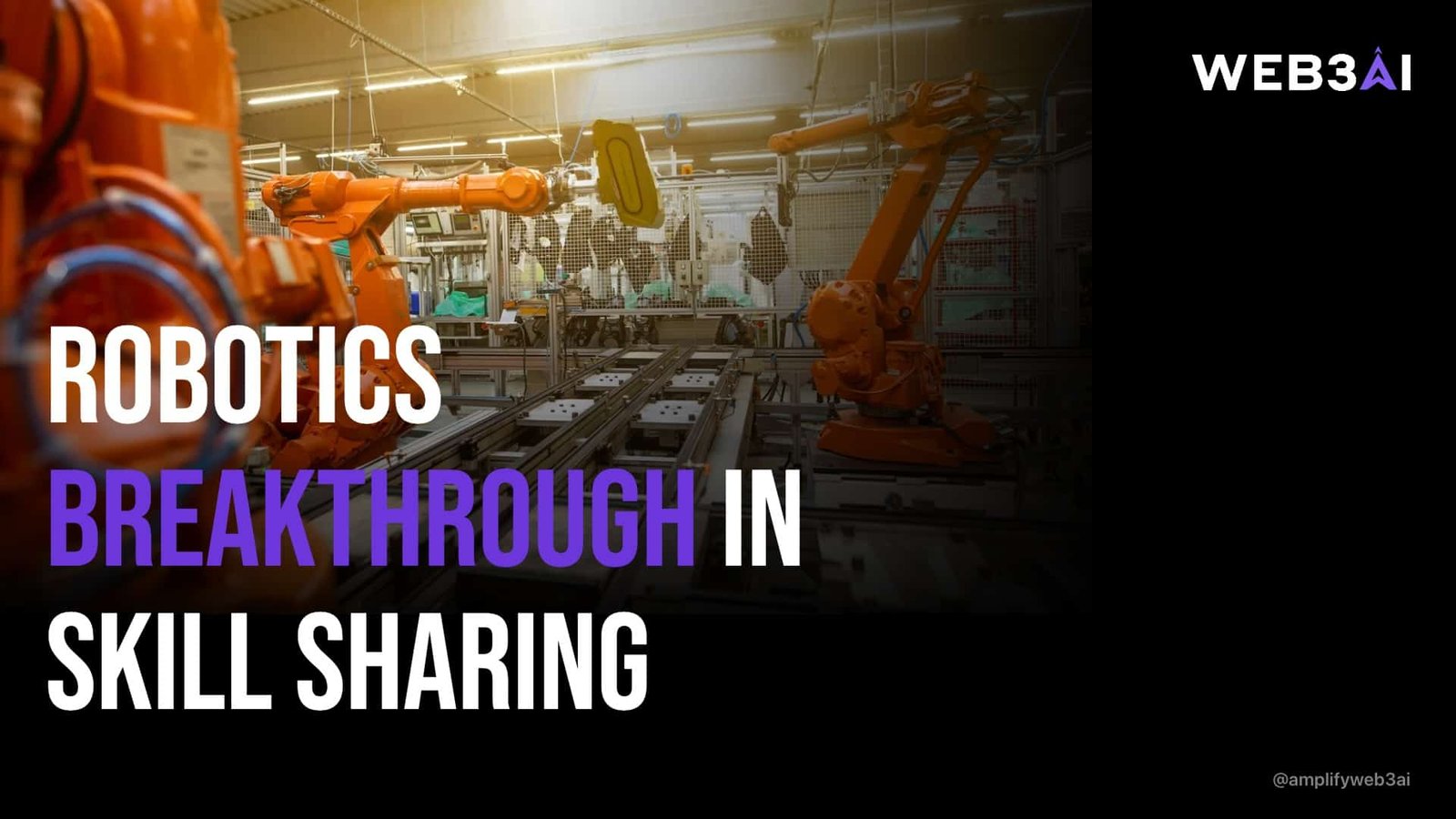

Cross-embodiment robot skill sharing is no longer a distant research dream — it is happening right now, and the implications for AI, manufacturing, and everyday life are profound. For years, one of robotics’ most stubborn problems has been that skills trained on one robot body simply could not transfer to another. A robotic arm that mastered folding laundry was useless knowledge to a wheeled delivery bot. Each new robot shape meant starting from scratch, burning enormous time and compute. That bottleneck may finally be breaking open.
A new wave of research — highlighted by work published in Nature and covered widely in the robotics community — demonstrates that robots with fundamentally different physical designs can now share learned skills through unified AI models. As MIT Technology Review reported in 2024, this cross-embodiment approach is being called one of the most significant leaps in general-purpose robotics in a decade. The core idea: instead of training robots in isolation, researchers are building shared “skill libraries” that translate across body types, joint configurations, and sensor setups.
This post breaks down exactly how cross-embodiment robot skill sharing works, why it matters beyond the lab, and what it signals for the broader AI revolution already reshaping industries worldwide.
At its core, cross-embodiment robot skill sharing refers to the ability of AI models to transfer learned motor skills — picking, placing, navigating, assembling — from one robot body design to another. Traditionally, a policy trained on a six-axis industrial arm would fail entirely on a four-legged walking robot, even if the task was conceptually identical. The physical mismatch was simply too great for conventional machine learning pipelines to bridge.
The new approach treats the robot’s body as a variable rather than a fixed constraint. Researchers accomplish this by training on enormous datasets that include demonstrations from dozens of different robot morphologies simultaneously. The model learns abstract, body-agnostic representations of skills — essentially understanding “what to do” independently of “which joints to move.” When deployed on a new robot, the model adapts the abstract skill to the available hardware.
Think of it like sheet music. A pianist and a guitarist play very different instruments, but they can both learn from the same musical score because the score describes the song, not the instrument. Cross-embodiment models write the musical score for physical tasks — and any robot becomes a potential performer.
The most recent landmark study involved training a single large-scale AI model — sometimes called a “generalist robot policy” — on data collected from over 20 different robot platforms. These ranged from tabletop arms used in research labs to mobile manipulation robots designed for warehouses. Crucially, none of these robots were mechanically identical. They differed in the number of joints, gripper types, sensor configurations, and degrees of freedom.
The model was then tested on robot bodies it had never seen during training. Results showed it could perform household and industrial manipulation tasks with success rates comparable to models trained exclusively on each robot type individually. That is a significant finding: generalization did not come at the cost of performance. The robots were not just “okay” on new bodies — they were genuinely capable.
Researchers credit a combination of transformer-based architectures, large-scale imitation learning, and carefully curated multi-robot datasets. The transformer’s ability to process variable-length input sequences made it naturally suited to handling robots with different numbers of joints and sensors — treating each joint as a “token” in the model’s attention mechanism.
Pro Tip: If you are exploring AI investments or partnerships, pay close attention to robotics companies building cross-embodiment foundations rather than single-platform solutions. Generalist robot models are likely to dominate the next decade the way foundation language models dominate NLP today.
The implications of cross-embodiment robot skill sharing extend far beyond the robotics lab. Consider what happens when a logistics company can train a skill once — say, sorting parcels by size — and deploy it across every robot in its fleet, regardless of manufacturer or model year. Training costs collapse. Deployment timelines shrink from months to days. Competitive advantage shifts from “who has the best robot hardware” to “who has the best skill library.”
This mirrors a shift already underway in software AI. If you have been following how AI agents are changing the future of work, you will recognize the pattern: general-purpose intelligence layers being built on top of diverse, specialized systems. Just as AI agents are replacing task-specific software bots with flexible reasoning systems, cross-embodiment models are replacing task-specific robot programs with flexible physical intelligence. The economic logic is identical — generalism at scale outcompetes narrow specialization.
For workers and organizations, this creates both opportunity and urgency. Teams that understand how to curate, manage, and deploy robot skill libraries will hold significant leverage. The humans who thrive will be those who can work alongside increasingly capable, adaptable physical AI systems rather than those who compete with any single robot’s narrow capability.
Several converging technologies have made this moment possible. It is worth understanding each one, because together they represent a new infrastructure layer for physical AI — as foundational as cloud computing was for digital AI.
None of these technologies is brand new in isolation. What is new is their convergence at sufficient scale to produce genuinely generalizable physical intelligence. The compound effect is what makes 2025 feel like an inflection point for robotics.
Cross-embodiment skill sharing is a critical step toward what many researchers call general-purpose robots — machines that can perform a wide range of tasks across a wide range of environments without being retrained for each new context. This is the physical-world analogue of large language models in the digital world: systems that are broadly capable rather than narrowly specialized.
Understanding where this fits in the broader arc of autonomous AI development is essential context. As explored in our overview of the rise of autonomous AI and what you need to know, the shift from narrow AI to systems that generalize across domains is the defining technological trend of this decade. Cross-embodiment robotics is simply that trend made physical.
The road ahead still has significant challenges. Robots that generalize across bodies do not yet generalize across all task types with equal reliability. Dexterous manipulation — fine-grained tasks like threading a needle or operating a scalpel — remains harder to transfer than coarser tasks like picking and placing. Safety verification for generalist robot policies in human-occupied environments is an open research problem. And the energy costs of running large transformer models on mobile robot hardware are non-trivial.
Pro Tip: When evaluating robotics platforms for enterprise deployment, ask vendors specifically about their cross-embodiment compatibility. Companies building on open, shared skill libraries will offer far more flexibility than those locking you into proprietary single-platform ecosystems.
It would be a mistake to view cross-embodiment robot skill sharing as purely academic. Several industries are already piloting applications that depend directly on this capability, and the early results are instructive about where adoption will accelerate fastest.
The intersection of these capabilities with decentralized data and AI infrastructure is also worth watching closely. As Web3 and AI combine into a powerful new paradigm, the question of who owns and governs the shared robot skill libraries powering these systems becomes critically important. Decentralized data markets could allow robot operators to contribute training demonstrations and earn from the shared pool — a compelling model for bootstrapping the datasets that cross-embodiment AI needs to thrive.
Cross-embodiment robot skill sharing is the ability of a single AI model to learn physical skills — like picking, placing, or navigating — from one robot and apply them to a robot with a completely different body design. Instead of training separate AI systems for each robot type, researchers build generalist models that represent skills in a body-agnostic way, allowing those skills to transfer across different hardware configurations.
Traditional robot programming is hardware-specific: the code, trajectories, and parameters written for one robot cannot be reused on a mechanically different robot without significant re-engineering. Cross-embodiment skill sharing uses machine learning — specifically large transformer-based models trained on diverse multi-robot datasets — to learn abstract, transferable representations of tasks that adapt automatically to new robot bodies.
Logistics, warehousing, healthcare, agriculture, and construction are the sectors with the most immediate applications. These industries already operate mixed fleets of robots with different designs, and the cost of maintaining separate AI systems for each platform is a real operational burden. Cross-embodiment models could unify training and dramatically reduce deployment costs across all of them.
Fine-grained dexterous manipulation remains the hardest capability to transfer reliably across different robot bodies. Safety verification for generalist policies operating near humans is an open and urgent research challenge. Running large AI models on mobile robot hardware within acceptable energy and latency budgets is also a significant engineering problem that the field has not fully solved.
Cross-embodiment models require massive, diverse training datasets collected from many different robots and operators. Web3 infrastructure — decentralized data markets, token incentives, verifiable provenance — offers a compelling mechanism for robot operators to contribute training data, earn compensation, and trust the integrity of shared skill libraries without relying on a centralized data broker. This makes decentralized AI infrastructure a natural fit for scaling cross-embodiment learning at global scope.
Cross-embodiment robot skill sharing is more than a technical milestone — it is a signal that physical AI is entering its generalist era. Just as large language models shifted the AI conversation from narrow task-specific tools to broad reasoning systems, cross-embodiment models are doing the same for robots in the physical world. The robots of the next decade will not be defined by their individual hardware. They will be defined by the shared intelligence they can access, contribute to, and build upon. That shift has enormous consequences for industry, for workers, and for anyone thinking seriously about where AI is headed.
The convergence happening right now — between generalist robot policies, decentralized data infrastructure, and autonomous AI systems — is exactly the kind of intersection that amplifyweb3.ai was built to help you understand and navigate. Whether you are an operator, an investor, or simply someone who wants to stay ahead of the curve, the time to develop fluency in these ideas is now, not after the transition is complete. Explore what we have built at attn.live.