Anouncement

Anouncement
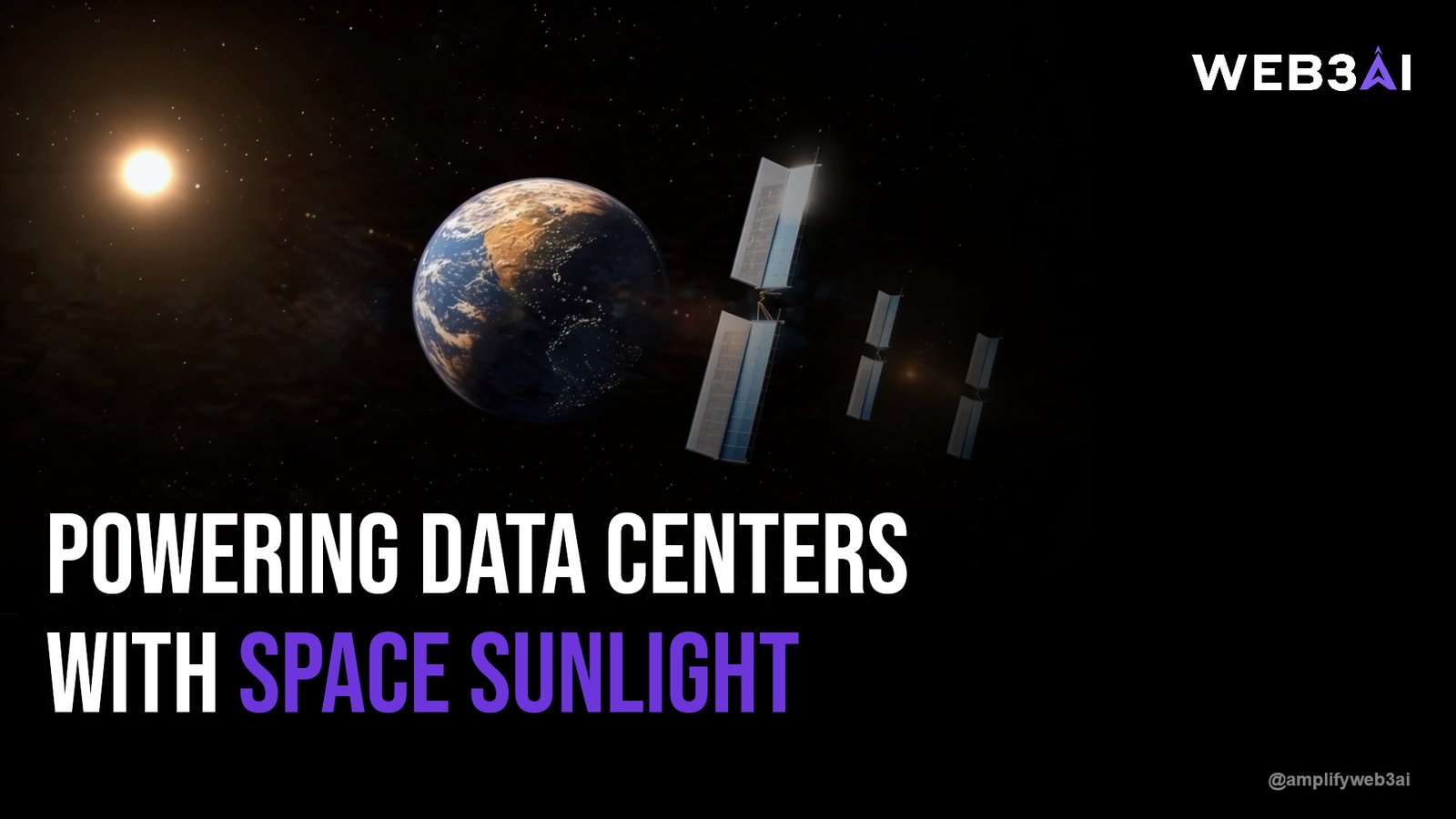

Space-based solar power for AI data centers is no longer science fiction — Meta has just made it a boardroom priority. The company has formally reserved 1 gigawatt of orbital solar energy and 100 gigawatt-hours of long-duration storage from Aetherflux, a startup pioneering the collection of sunlight in orbit and its transmission back to Earth. This is one of the most ambitious energy procurement moves in the history of the tech industry, and it signals just how serious the AI infrastructure crisis has become.
The scale of energy demand from modern AI training and inference workloads is staggering. According to Wired’s reporting on the generative AI gold rush, AI-driven data centers are already straining national power grids, with projections showing demand could triple within the decade. Meta’s move to look beyond the atmosphere for a solution is not just audacious — it is a direct response to a very real and growing crisis on the ground.
In this post, we break down exactly what Meta and Aetherflux are proposing, how space-based solar actually works, why AI is driving this conversation, and what it means for the future of sustainable technology infrastructure.
Space-based solar power works by placing large photovoltaic satellites in geostationary orbit roughly 22,000 miles above Earth. At that altitude, satellites are exposed to continuous, uninterrupted sunlight — no night cycles, no cloud cover, no atmospheric interference. The energy collected is then converted into microwave or laser beams and transmitted down to ground-based receivers, where it is converted back into usable electricity.
Aetherflux, the startup at the center of this deal, is developing exactly this kind of orbital solar infrastructure. Meta’s reservation of 1 gigawatt from their system is a commercial signal of extraordinary confidence. For context, 1 gigawatt is roughly the output of a large nuclear power plant — enough to power hundreds of thousands of homes, or in this case, a significant slice of a hyperscale AI data center’s appetite.
Meta’s interest is not purely altruistic or experimental. The company is one of the largest consumers of computing power on the planet, training some of the world’s most capable open-source large language models. Finding clean, reliable, always-on energy that does not depend on weather or local grid capacity is a genuine operational need, not a PR exercise.
Pro Tip: Geostationary orbit gives solar satellites a massive advantage over ground-based solar — they receive roughly 8 times more solar energy per year because there is no atmosphere, no night, and no seasons to contend with.
To understand why Meta is looking to space, you first need to understand the scale of the energy problem that space-based solar power for AI data centers is meant to solve. Training a single frontier AI model can consume as much electricity as dozens of average American homes use in an entire year. And that is before you account for the ongoing energy cost of running inference — serving AI responses to billions of users every single day.
The challenge is not just cost. It is availability. In many parts of the United States and Europe, permitting a new utility-scale power connection for a data center can take years. Grid operators are increasingly reluctant to approve new large industrial loads. Renewable energy sources like wind and solar are intermittent, requiring storage buffers that are expensive and land-intensive. Nuclear is promising but slow to build.
Space-based solar sidesteps nearly all of these constraints. It is always on, it requires no land beyond the receiver footprint, it does not strain local grids in the same way, and it can theoretically be scaled by launching additional satellites. Meta’s 100 gigawatt-hours of long-duration storage reservation alongside the 1 gigawatt generation reservation tells you they are thinking seriously about grid integration — not just raw generation.
For a deeper look at how AI’s appetite for electricity is reshaping the energy landscape more broadly, explore this analysis: How AI Is Transforming the Energy Sector.
Aetherflux is one of a new generation of startups — alongside Virtus Solis and the European Space Agency’s ongoing SOLARIS initiative — that are engineering practical space-based solar systems for commercial use. The core technology involves deploying modular photovoltaic arrays in geostationary orbit, where they capture sunlight continuously. The collected energy is then beamed to Earth using high-frequency radio waves or directed-energy optical systems.
The ground receiving stations — called rectennas — convert the incoming beams back into electricity with high efficiency. One of the key engineering achievements Aetherflux and its peers are working on is making this transmission safe, reliable, and commercially viable at scale. Early concerns about microwave beams and safety have been substantially addressed in modern designs, which use low power density spread over large receiver areas.
The 100 gigawatt-hours of long-duration storage that Meta has also reserved is a critical piece of the puzzle. No single energy source, even a space-based one, operates perfectly in isolation. Long-duration storage — think multi-day or even week-long battery or thermal storage systems — allows excess energy to be banked during peak generation and drawn down during periods of higher demand or transmission interruption.
Pro Tip: Long-duration energy storage (LDES) is the missing piece in most clean energy strategies. Systems that can store energy for 10, 50, or even 100+ hours are essential for making intermittent and novel sources like space solar truly grid-reliable.
Space-based solar power for AI data centers represents a fundamental shift in how we think about the limits of AI scaling. For the past several years, the dominant narrative has been that AI growth will eventually be constrained by energy availability. Utilities cannot build transmission lines fast enough. Governments are weighing the societal cost of handing scarce grid capacity to private tech companies. The math seemed to be working against continuous exponential growth in AI compute.
Meta’s Aetherflux deal, even as a reservation rather than a completed project, changes the terms of that conversation. It demonstrates that at least one of the world’s largest AI operators is willing to invest in genuinely novel energy infrastructure — not just lobbying for a faster permitting process or building more gas peakers behind the meter.
For a broader perspective on where AI infrastructure is heading, read our overview: The Future of AI Infrastructure.
It would be fair to ask: why not just build more wind farms and solar parks? Ground-based renewables have gotten dramatically cheaper over the past decade, and battery storage is improving quickly. The honest answer is that for hyperscale AI data centers with massive, always-on power demands, intermittency remains a genuine problem — and land-use constraints are a political and logistical reality, not just a technical one.
Space-based solar does not compete with ground solar on cost per kilowatt-hour in today’s market. It competes on reliability, density, and independence from terrestrial constraints. A geostationary satellite does not need planning permission. It does not face local opposition. It does not go dark for six hours every night. For a company like Meta, paying a premium for that level of energy certainty may well be rational economics when you are spending tens of billions annually on AI compute.
There are also compelling sustainability arguments. Space solar produces no direct emissions, no water consumption, no land clearing, and no local habitat impact beyond the small receiver site footprint. If the launch vehicles used to deploy the satellites are themselves low-emission — increasingly realistic with reusable rocket technology — the lifecycle carbon footprint could be genuinely competitive with other clean energy sources.
For context on how Web3 and emerging technologies are engaging with sustainability challenges more broadly, see our piece on Web3 and Sustainability.
Space-based solar power for AI data centers refers to the collection of solar energy in orbit using satellite-mounted photovoltaic arrays, with the energy beamed back to Earth and used to power large-scale AI computing infrastructure. Because satellites in geostationary orbit receive continuous sunlight with no atmospheric interference, this approach can provide always-on clean energy at scales that challenge traditional ground-based renewables.
Meta’s AI operations require enormous amounts of reliable, clean electricity. Ground-based renewables are intermittent and face significant land-use and grid-connection hurdles. By reserving 1 gigawatt of orbital solar capacity from Aetherflux, Meta is hedging against future energy constraints and positioning itself as a leader in next-generation sustainable AI infrastructure.
Satellites collect sunlight using large photovoltaic panels and convert it into microwave or laser energy. This beam is then transmitted to ground-based receiving stations called rectennas, which convert the incoming energy back into usable electricity. Modern designs spread the beam over large surface areas at low power density, making the transmission safe for both people and wildlife in the vicinity.
Not yet at commercial scale. Meta’s deal with Aetherflux is a reservation of future capacity rather than a live operational arrangement. Several companies and government agencies are actively developing and testing orbital solar technology, with commercial-scale deployments widely expected sometime in the 2030s depending on launch economics and regulatory progress.
Space-based solar offers continuous, weather-independent generation with no land-use footprint beyond the receiver site, which gives it significant advantages over ground solar and wind for always-on industrial loads. It is currently more expensive per kilowatt-hour than mature ground-based renewables, but the premium buys reliability and grid independence that have real operational value for hyperscale AI operators like Meta.
Space-based solar power for AI data centers is moving from a theoretical concept to a commercial reality faster than almost anyone predicted. Meta’s reservation of 1 gigawatt of orbital solar capacity and 100 gigawatt-hours of long-duration storage from Aetherflux is one of the clearest signals yet that the AI industry is taking its energy problem seriously — and is willing to think far outside the box, quite literally, to solve it. The energy demands of AI are not going to shrink. The question is whether we build the infrastructure to meet them cleanly and responsibly, or let the status quo dictate our limits.
This is the kind of bold, system-level thinking that defines the next chapter of technology. The companies and communities that understand these intersections early — energy, AI, orbital infrastructure, long-duration storage — will be best positioned to participate in what comes next. Explore what we have built at attn.live.