Anouncement

Anouncement


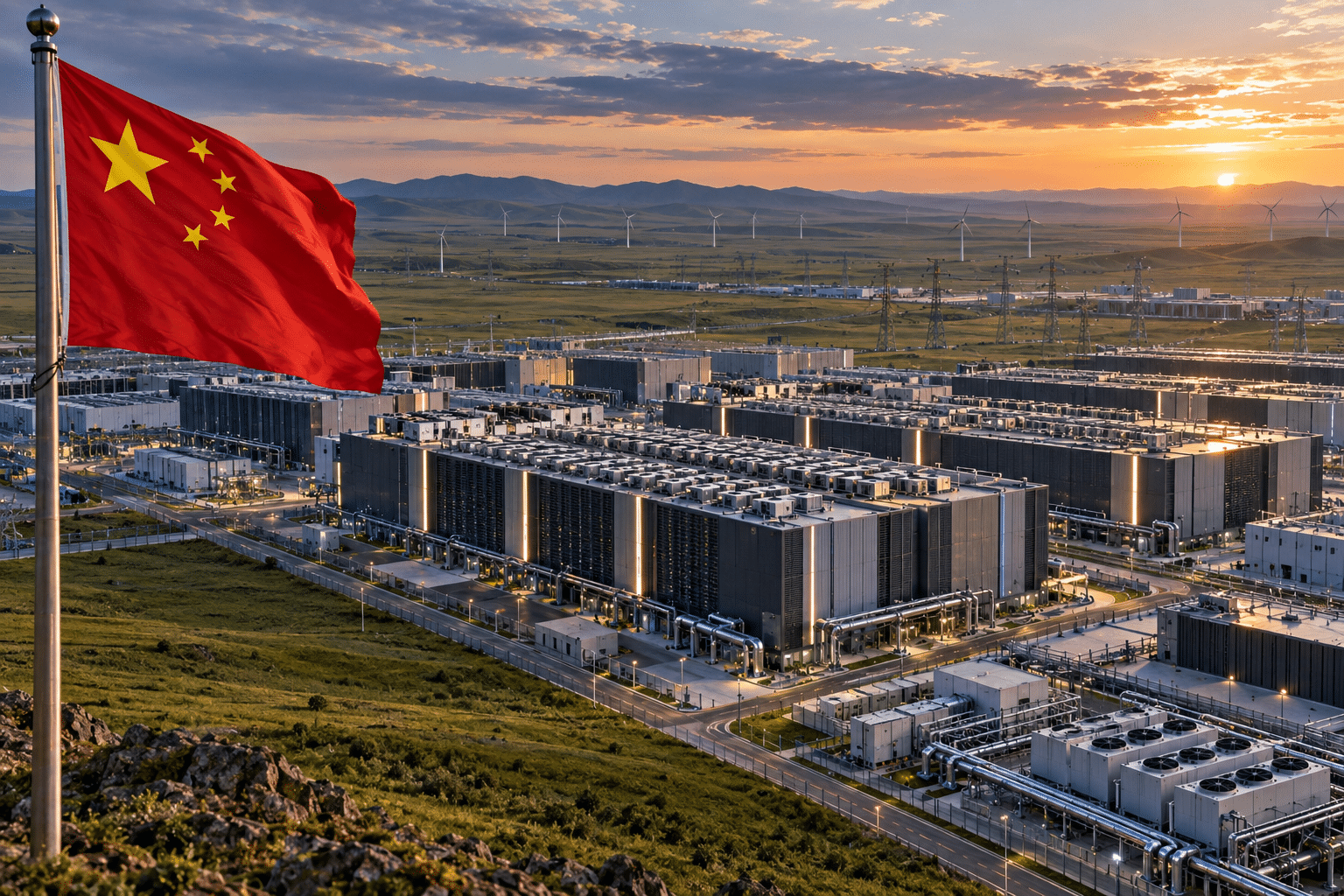
The AI infrastructure investment trade has become one of the most quietly powerful wealth generators in modern markets — and most everyday investors are only just beginning to notice it. While headlines obsess over flashy AI chatbots and consumer-facing tools, a different, more durable bet has been compounding returns in the background. It’s not about which AI model wins the software race. It’s about who builds the roads those models run on.
According to a Forbes analysis on AI infrastructure spending, capital flowing into data centers, networking equipment, and power generation to support AI workloads is accelerating at a pace that few asset classes can match. The numbers are staggering — and the winners aren’t always the names splashed across tech news. This post unpacks exactly what’s driving this trade, who’s benefiting, and what it signals for the broader technology investment landscape in 2025 and beyond.
If you’ve ever wondered why certain semiconductor firms, utility companies, and commercial real estate trusts are quietly outperforming, you’re about to find out. This post breaks down the mechanics of the AI infrastructure trade — the companies involved, the capital flows behind it, and why this trend is likely just getting started.
At its core, the AI infrastructure investment trade is a bet on the physical and digital backbone required to run artificial intelligence at scale. Unlike investing in AI software companies — which carry enormous uncertainty about which product or platform will dominate — infrastructure plays benefit from every competitor in the space simultaneously. Whether OpenAI, Google DeepMind, Anthropic, or Meta’s Llama models win the AI race, they all need chips, cooling systems, fiber optic cables, and electricity to function.
This is the classic “picks and shovels” logic applied to a new gold rush. During the California Gold Rush of 1849, the merchants selling shovels and pans often made more reliable profits than the miners themselves. The same principle applies today. Nvidia’s GPU dominance is perhaps the most visible example, but the trade extends far beyond semiconductors — into cooling technology firms, data center REITs, power infrastructure companies, and even water utilities serving hyperscale campuses.
What makes this trade particularly compelling in 2025 is the sheer scale of committed capital. Microsoft, Amazon, Google, and Meta have collectively pledged hundreds of billions of dollars in AI infrastructure spending over the next several years. That’s not speculative — it’s announced, budgeted, and already flowing into supply chains. The companies positioned along those supply chains are sitting on a multi-year revenue tailwind.
Pro Tip: When evaluating AI infrastructure plays, look beyond semiconductors. Power management companies, liquid cooling specialists, and fiber network operators often offer less crowded entry points with comparable upside.
Understanding which sectors compose this trade helps you see why it’s been so durable. The investment opportunity spans several interconnected industries, each benefiting from the same underlying demand surge. Here’s how the major categories break down:
For a deeper look at how AI is transforming the broader technology landscape, including Web3 applications, our guide on how AI is reshaping the future of Web3 explores the convergence of decentralized infrastructure with AI workloads — a combination that is beginning to attract significant institutional attention.
Here’s something counterintuitive: despite the billions flowing through it, the AI infrastructure investment trade received relatively muted mainstream coverage for most of 2023 and 2024. Analyst notes focused on AI software valuations, model capabilities, and consumer adoption curves. Infrastructure was treated as a footnote — boring, capital-intensive, slow-moving. That perception created an opening.
Savvier institutional investors began accumulating positions in data center operators, power equipment manufacturers, and cooling specialists before those sectors appeared on retail radar. By the time Bloomberg and others began reporting on the “quiet” nature of this trade in 2025, many of the largest positions had already been built. The returns, in some cases, were already substantial — without the volatility typically associated with AI software bets.
What’s shifting now is visibility. As AI model training costs continue rising and inference demand explodes with widespread deployment, the infrastructure bottleneck becomes impossible to ignore. CEOs of hyperscale companies are publicly warning about power availability constraining their expansion plans. That kind of supply constraint language from trillion-dollar companies is a signal that the infrastructure trade is not only real — it may be underpriced relative to the demand it’s serving.
Pro Tip: Pay attention to earnings calls at hyperscale companies like Microsoft Azure, AWS, and Google Cloud. When executives mention infrastructure constraints or capex acceleration, those comments are direct signals for downstream infrastructure plays.
Perhaps the most underappreciated dimension of the AI infrastructure investment trade is electricity. Training a single large language model can consume as much power as hundreds of homes use in a year. Multiply that by thousands of training runs and billions of daily inference requests, and you start to understand why power availability has become the binding constraint on AI expansion.
This power dynamic is reshaping energy investment priorities in ways that weren’t anticipated just a few years ago. Nuclear power is experiencing a serious institutional revival — Microsoft signed a landmark deal to restart the Three Mile Island plant specifically to power AI data centers. Natural gas “peaker” plants are being considered for dedicated AI campus power supply. Utility-scale battery storage is being fast-tracked to handle demand spikes from GPU clusters.
For investors, this creates an entire secondary layer of the infrastructure trade that intersects with energy transition themes. Solar and wind developers with long-term power purchase agreements near major data center corridors are suddenly more valuable. Transmission infrastructure companies that can move renewable power to data center hubs are seeing renewed interest. The AI infrastructure investment trade, in this sense, is also an energy infrastructure trade.
The Web3 space is beginning to grapple with these same energy dynamics. Our deep dive on the rise of AI agents in Web3 examines how decentralized compute networks are positioning themselves as more energy-efficient alternatives for certain AI workloads — a trend worth watching as power costs become a competitive differentiator.
No investment thesis is complete without an honest accounting of the risks. The AI infrastructure investment trade is compelling, but it carries real vulnerabilities that thoughtful investors should understand before entering positions.
The convergence of AI with decentralized systems offers one potential hedge against some of these risks. Web3 and AI convergence is creating distributed compute models that could reduce reliance on centralized hyperscale infrastructure — worth factoring into any long-term infrastructure thesis.
The Bloomberg podcast that surfaced this topic in April 2025 framed it as a “quiet” trade — something that had been generating returns without the fanfare typically associated with AI investment narratives. That framing is telling. The most durable investment themes often operate below the noise level of mainstream financial media until they’re too large to ignore.
What the AI infrastructure investment trade signals for the remainder of 2025 is a continued bifurcation between AI hype stocks and AI necessity stocks. Hype stocks rise and fall with product announcements, model benchmarks, and regulatory headlines. Necessity stocks — the companies providing chips, power, cooling, and connectivity — are underpinned by purchase orders, long-term contracts, and the irreversible commitment of hundreds of billions in capex from the world’s largest technology companies.
The trade also signals something broader about how transformative technology waves create investment opportunities. The most reliable profits often come not from picking the dominant AI platform — a notoriously difficult prediction — but from identifying what all AI platforms will always need. In 2025, that means power, silicon, and physical real estate for computing. That’s a durable thesis regardless of which AI company wins.
The AI infrastructure investment trade refers to investing in the physical and digital components required to run AI systems at scale — including semiconductors, data centers, power infrastructure, cooling systems, and networking equipment. Rather than betting on which AI software wins, this trade profits from everything AI needs to operate, regardless of which platform dominates.
It received less mainstream coverage than AI software stocks because infrastructure companies are often perceived as slower-moving, capital-intensive businesses. However, this perception created an opportunity — institutional investors accumulated large positions before retail attention arrived, generating significant returns with less volatility than pure AI software plays.
The primary sectors include semiconductor manufacturers, data center REITs, power utilities, liquid cooling technology companies, fiber and networking providers, and construction engineering firms specializing in large-scale data center projects. Each benefits from the same underlying demand — the explosive growth in AI compute requirements.
Key risks include overbuilding relative to actual demand, technology disruption from next-generation chip architectures, customer concentration among a handful of hyperscalers, regulatory changes affecting power consumption or semiconductor exports, and valuation risk given how much the leading infrastructure companies have already re-rated upward since 2023.
Decentralized compute networks represent an emerging alternative infrastructure layer for AI workloads, potentially offering greater energy efficiency and reduced reliance on centralized hyperscale providers. As power costs become a competitive differentiator in AI deployment, Web3-native compute protocols are beginning to attract institutional attention as a complementary or hedging element within broader AI infrastructure portfolios.
The AI infrastructure investment trade is not a short-term speculative bet — it is a multi-year structural shift driven by committed capital from the world’s largest technology companies. The physical requirements of AI at scale — power, silicon, cooling, connectivity — are not going away, and the companies providing those necessities are positioned for durable growth regardless of which AI model or platform emerges as the dominant consumer interface.
For investors, creators, and technology builders, understanding this trade is less about timing a market entry and more about recognizing where value is genuinely being created in the AI economy. The glamorous layer of AI — the chatbots, the creative tools, the autonomous agents — sits on top of an enormous, unglamorous, and enormously profitable infrastructure stack. That stack is worth understanding deeply.
Whether you’re an investor looking to position thoughtfully, a builder thinking about where to deploy decentralized AI infrastructure, or simply someone trying to make sense of where technology is heading, the signal here is clear: the backbone of AI is the most important build-out of this generation. Explore what we have built at attn.live.