Anouncement

Anouncement
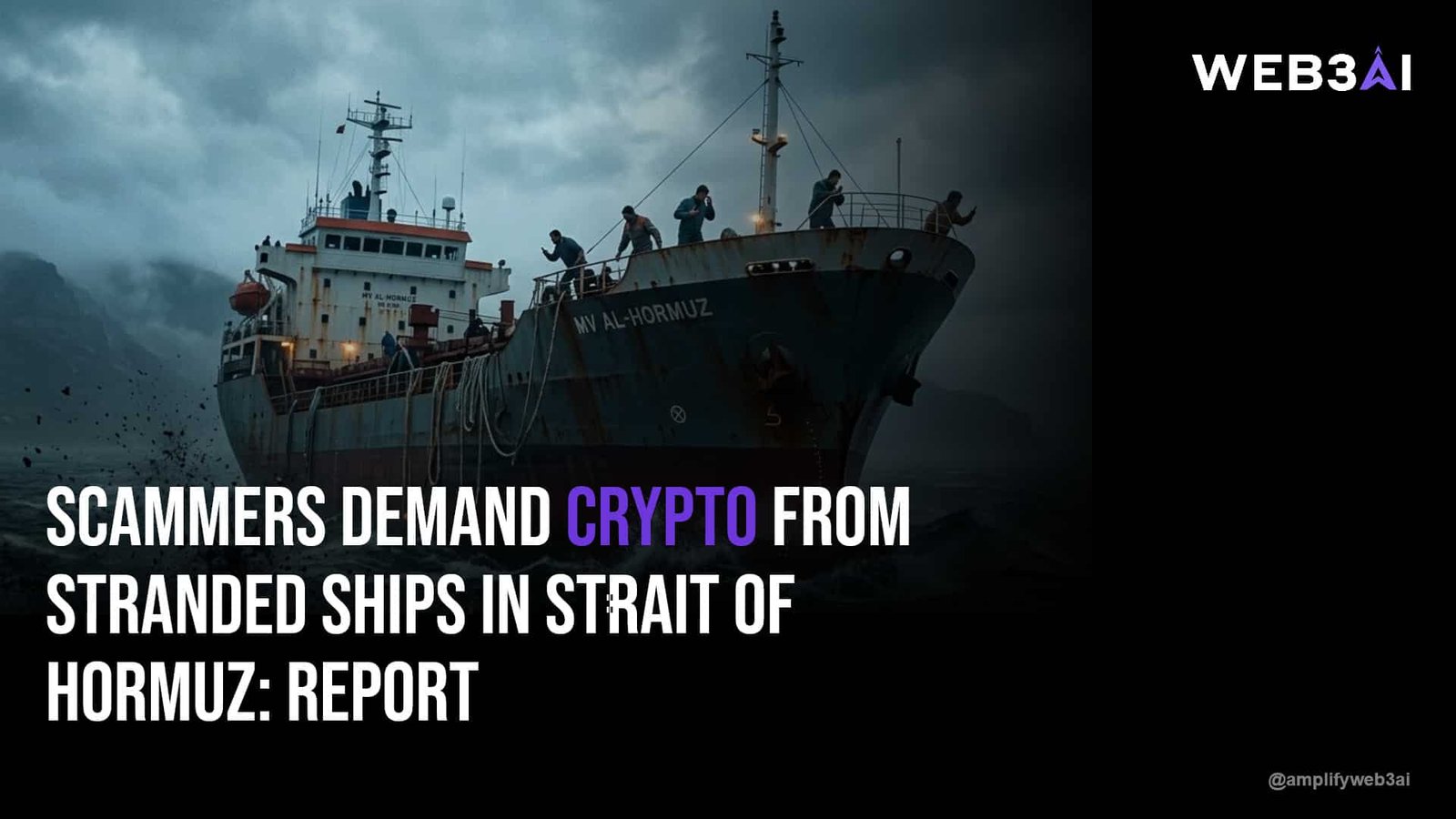

A brazen new wave of crypto fraud involving Iranian authorities — or rather, criminals impersonating them — is targeting commercial vessels navigating the strategically critical Strait of Hormuz. Fraudsters are contacting ships by radio, posing as the Iranian Navy or Iranian Coast Guard, and demanding immediate cryptocurrency payments to avoid detention or seizure. It is a scam that fuses geopolitical tension with digital extortion, and it is catching mariners off guard at one of the world’s busiest and most pressurized shipping chokepoints.
The scheme is as bold as it is calculated. Ships transiting the Hormuz strait already operate under immense stress — real Iranian naval patrols do occasionally intercept vessels — so the line between a legitimate warning and a criminal bluff is deliberately blurred. According to Reuters reporting on Chainalysis data, global crypto crime reached $51 billion in 2024, underscoring how rapidly criminal enterprises are pivoting to digital assets for extortion and fraud. This Hormuz scheme is a vivid, real-world example of that trend moving beyond the internet and into critical global infrastructure.
In this post, we break down exactly how the scam works, why crypto is the payment method of choice, what the maritime industry and regulators are saying, and — most importantly — what individuals and organizations can do to recognize and resist these tactics.
The mechanics of the fraud are straightforward but effective. A vessel transiting the Strait of Hormuz receives a radio call — sometimes on distress frequencies — from someone claiming to represent the Iranian Navy or a related authority. The caller issues an ultimatum: pay a fee in cryptocurrency immediately, or face boarding, detention, and cargo seizure.
Cryptocurrency is the demanded currency for a reason. Transactions are fast, cross-border, and — when routed through privacy coins or mixers — extremely difficult to trace or reverse. Unlike a wire transfer, there is no bank compliance officer to flag the transaction as suspicious. Once the crypto leaves the sender’s wallet, it is effectively gone.
The fraudsters rely heavily on the environment. Real Iranian naval vessels do patrol these waters, and real incidents of ship detentions have occurred in the region over the past decade. That documented history of genuine confrontations gives the scam its psychological leverage — a captain under pressure, far from legal counsel and institutional support, may calculate that paying a relatively small crypto ransom is cheaper than the alternative.
Pro Tip: Maritime crews should establish a pre-agreed verification protocol with their shipping company before entering high-risk straits. Any demand for payment — in any currency — should trigger an immediate call to headquarters and flag state authorities before any action is taken.
The Strait of Hormuz is not just any shipping lane. Roughly 20% of the world’s oil and a significant share of global liquefied natural gas pass through this narrow channel between Iran and Oman. Dozens of commercial tankers, bulk carriers, and container ships transit it every single day. The geopolitical tension in the region — sanctions, proxy conflicts, and real naval standoffs — creates a climate of ambient fear that fraudsters can exploit.
Iran has a documented history of seizing or harassing foreign vessels, most visibly in 2019 when the IRGC (Islamic Revolutionary Guard Corps) seized the British tanker Stena Impero. Fraudsters who impersonate Iranian naval authority are, in effect, borrowing the credibility of that real history. They do not need elaborate technology — a radio, a confident voice, and a crypto wallet address are sufficient tools.
This is also a region where satellite communication can be unreliable, legal support is distant, and decisions must be made quickly. Scammers time their calls to maximize confusion, often during night transits or periods of heightened regional tension when news of Iranian naval activity is already circulating.
For a deeper look at how bad actors exploit digital payment systems across high-risk industries, explore our coverage of emerging Web3 security threats on the AmplifWeb3 blog, where we track how fraud is evolving alongside blockchain adoption.
It is no accident that the fraudsters in this scheme demand crypto rather than traditional currency. Cryptocurrency removes nearly every friction point that normally protects victims and aids law enforcement. There are no international wire transfer protocols, no correspondent banking oversight, and no automatic fraud detection layer between the payer and the scammer’s wallet.
Bitcoin remains the most commonly demanded asset in extortion schemes because of its liquidity and global recognizability — even among people with little crypto experience. However, reports from maritime security analysts suggest that some fraudsters are shifting toward privacy-focused tokens like Monero, which offer near-complete transaction anonymity.
What makes this particularly dangerous for the maritime sector is the institutional unpreparedness. Most shipping companies have detailed protocols for piracy, for mechanical emergencies, and for medical situations — but very few have crypto extortion response plans. The industry is playing catch-up with a threat it did not anticipate.
Pro Tip: Never send cryptocurrency in response to an unsolicited demand, no matter how official the caller sounds. Legitimate government authorities — including naval forces — do not accept crypto payments for fines, fees, or transit permits. This alone is a definitive red flag.
Maritime security agencies including the United Kingdom Maritime Trade Operations (UKMTO) and the US Navy’s Fifth Fleet — both of which monitor the Gulf region — have issued alerts warning commercial vessels about impersonation scams in the area. The guidance is consistent: do not comply with unexpected payment demands, report the contact immediately, and verify any authority claim through official channels.
Interpol and regional law enforcement agencies have also been collaborating on crypto fraud cases that intersect with maritime crime, though the decentralized and cross-jurisdictional nature of both crypto and high-seas incidents makes prosecution extremely difficult. The anonymity that makes crypto attractive to fraudsters also makes it hard to build an evidentiary chain that meets criminal standards in any single jurisdiction.
The shipping industry, for its part, is beginning to develop dedicated training modules. Organizations like BIMCO (the Baltic and International Maritime Council) are incorporating digital extortion awareness into their crew training frameworks — a necessary evolution given that the tools of fraud have outpaced the tools of defense.
Understanding how fraud detection works at a technical level is increasingly important for anyone operating in or adjacent to the crypto space. Our blog post on blockchain fraud detection strategies offers a practical overview of the on-chain tools that investigators use to track illicit crypto flows.
Whether you are a maritime professional or simply someone navigating the broader crypto landscape, the psychological tactics used in this scam are not unique to ships in the Hormuz. Impersonation of authority figures, artificial urgency, and demands for irreversible payment are the universal hallmarks of crypto fraud.
This list applies equally to phishing emails impersonating tax authorities, fake customer service calls from crypto exchanges, and social engineering attacks targeting DeFi protocol operators. The costume changes; the script does not.
This Hormuz scheme is not an isolated incident — it is the maritime expression of a global pattern. State impersonation is one of the fastest-growing vectors in crypto fraud. Fraudsters have impersonated the IRS, Europol, HMRC, and local police departments in dozens of countries, all demanding crypto payments to resolve fabricated legal issues.
What is new and particularly alarming here is the operational environment. Unlike a phishing email that lands in a corporate inbox, these fraud calls reach vessel officers who are physically isolated, under navigational stress, and operating in a region where the threat of real government interference is not hypothetical. The scam is engineered to be maximally believable in its specific context.
This trend also reflects a maturation in criminal sophistication. Early crypto scams were blunt instruments — fake ICOs, Ponzi schemes, and obvious phishing pages. The Hormuz impersonation scheme represents a far more targeted, contextually aware form of fraud that requires real knowledge of the operating environment, regional geopolitics, and the psychology of the victims.
For a comprehensive look at the scam tactics affecting the wider Web3 ecosystem in 2025, our crypto scam awareness resources are regularly updated to reflect emerging threats and real-world case studies.
This scam involves criminals using radio communications to impersonate Iranian naval or coast guard personnel and then demanding cryptocurrency payments from commercial vessels transiting the Strait of Hormuz. The fraudsters threaten ship detention or cargo seizure to pressure crews into complying before they can verify the legitimacy of the demand. No real Iranian government authority uses cryptocurrency for official fines or transit fees.
Cryptocurrency is preferred because transactions are fast, borderless, and nearly impossible to reverse once completed. Unlike bank transfers, there is no compliance layer or fraud detection system that can intercept a crypto payment. Privacy coins and mixing services can also make the trail nearly impossible to follow, significantly reducing the fraudsters’ risk of identification.
Crews should be trained to treat any unexpected payment demand — in any currency — as a red flag requiring immediate verification. They should contact their shipping company, the UKMTO, and flag state authorities before taking any action. Establishing a pre-agreed crypto extortion response protocol before entering high-risk transit zones is strongly recommended.
Yes — Iranian naval and coast guard vessels do legitimately operate in and around the Strait of Hormuz and have historically detained foreign vessels in disputed circumstances. This genuine precedent is exactly what fraudsters exploit. The key distinguishing factor is that no legitimate government authority anywhere in the world demands immediate cryptocurrency payment as a fee or fine — that demand alone identifies the contact as fraudulent.
No. State impersonation crypto fraud is a global phenomenon. Similar scams have been carried out via email, phone, and messaging apps impersonating the IRS, Europol, and other agencies. The Hormuz scheme is notable for its operational sophistication and the physically isolated, high-stress environment it targets, but the underlying tactics mirror fraud patterns seen across dozens of countries and industries.
Report the incident immediately to local law enforcement, your national financial crime reporting body, and blockchain analytics firms like Chainalysis or Elliptic, which work with law enforcement to trace illicit crypto flows. Also alert the UKMTO if the incident occurred in a maritime context. While crypto transactions are difficult to reverse, early reporting significantly improves the chances of an on-chain trace and potential asset freeze on exchange platforms.
The emergence of crypto fraud involving Iranian authority impersonation in the Strait of Hormuz is a stark reminder that digital crime does not stay on screens — it migrates to wherever pressure, isolation, and unfamiliarity create opportunity. The Hormuz scheme is sophisticated, contextually calibrated, and effective precisely because it operates at the intersection of real geopolitical risk and new financial technology that many maritime professionals are still learning to navigate.
The good news is that awareness remains the most powerful defense. Once you know that no legitimate government authority demands cryptocurrency as an immediate payment, the scam loses its central mechanism. Training, clear protocols, and rapid reporting chains are not just best practices — in high-risk transit zones, they are lifelines.
At AmplifWeb3, we believe that Web3 technology should empower people and organizations — not expose them to new vectors of exploitation. Understanding these threats, from ship decks to digital wallets, is the first step toward a safer and more resilient ecosystem. Explore what we have built at attn.live.