Anouncement

Anouncement
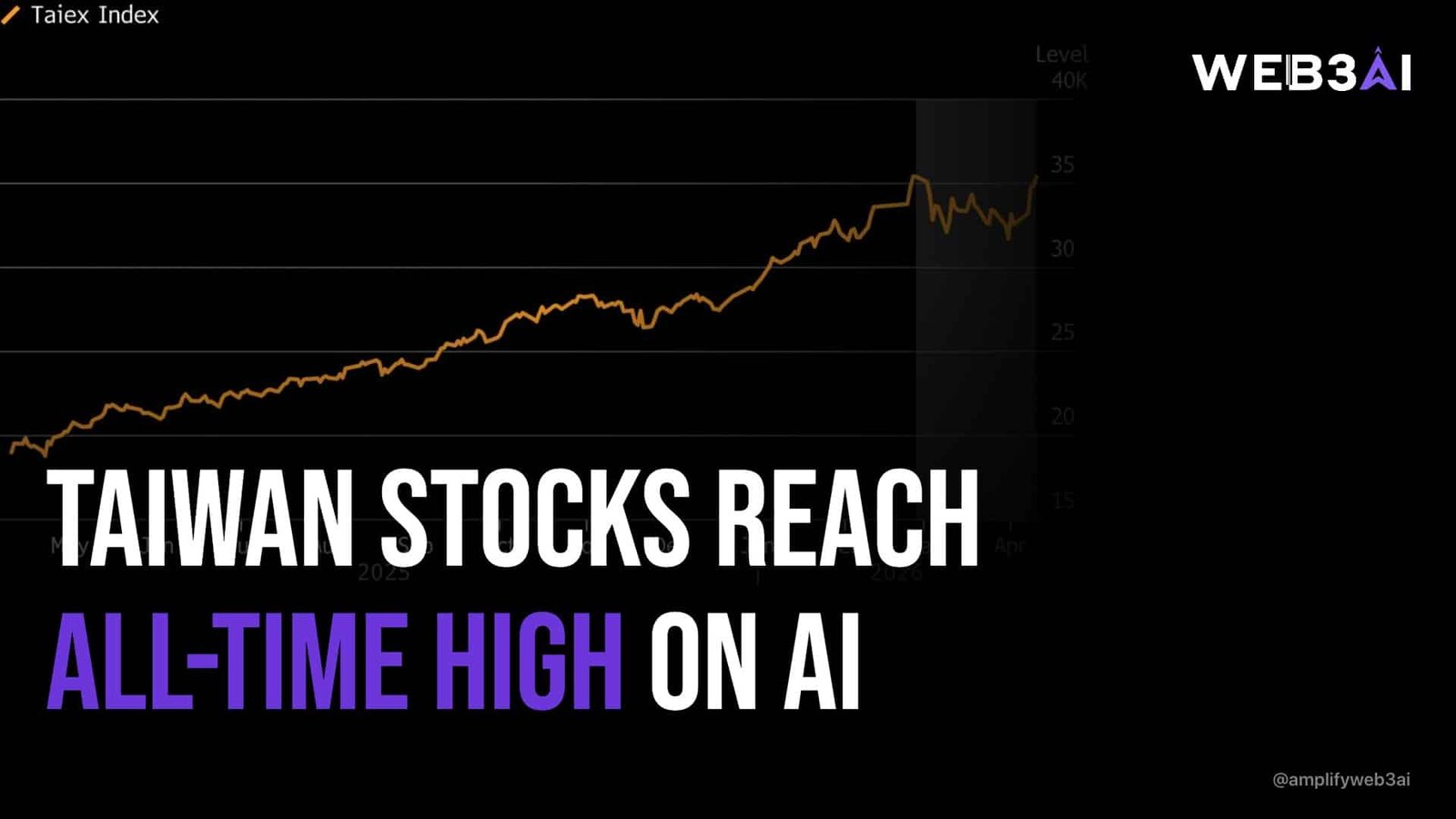

The Taiwan AI stock market rally is back — and this time it is breaking all-time records. In April 2026, Taiwan’s benchmark index surged to a fresh historic high, powered by a powerful resurgence in AI-related trading that has reignited investor enthusiasm across global tech markets. After months of turbulence driven by macroeconomic uncertainty and shifting rate expectations, the AI trade has roared back with renewed conviction.
This rally is not happening in isolation. According to Reuters reporting on the AI spending boom, companies enabling AI infrastructure — from chip designers to data center suppliers — have seen outsized stock gains as capital continues to flood into the sector. Taiwan sits at the very heart of that supply chain, making its market a real-time barometer for global AI sentiment.
In this post, we break down what is driving the Taiwan AI stock market rally, which sectors and companies are benefiting most, what risks remain on the horizon, and what this momentum means for investors watching the intersection of AI and global markets.
Taiwan’s stock market does not just reflect local economic conditions — it functions as a global proxy for AI and semiconductor demand. The island is home to TSMC (Taiwan Semiconductor Manufacturing Company), the world’s most advanced chipmaker and a critical supplier to nearly every major AI hardware company, including NVIDIA, Apple, AMD, and Qualcomm. When AI spending accelerates globally, Taiwanese stocks feel it first.
The April 2026 record high was led by semiconductor heavyweights, with TSMC shares jumping sharply on renewed optimism around AI chip orders. Supporting names in the supply chain — including substrate manufacturers, advanced packaging specialists, and memory chip makers — also posted strong gains. The breadth of the rally signaled that this was not a single-stock story but a sector-wide re-rating driven by structural AI demand.
Taiwan’s position is uniquely difficult to replicate. Despite years of geopolitical pressure and global efforts to reshore chip manufacturing, Taiwan still controls an estimated 90% of the world’s most advanced logic chip production. That concentration of capability means that any uptick in global AI infrastructure investment flows almost directly into Taiwanese equities.
Pro Tip: When tracking AI investment cycles, watch TSMC’s quarterly order guidance as a leading indicator. It often moves global tech sentiment weeks before broader indexes react.
For investors and observers following the AI economy, understanding how the Taiwan AI stock market rally connects to global AI infrastructure spending is essential context — not just a regional market story.
If you want to understand the broader forces reshaping how investors approach AI opportunities, this deep dive into how AI is transforming the investment landscape is a strong starting point for building that foundation.
Several converging factors lit the fuse on this latest rally. First, major US hyperscalers — including Microsoft, Google, Meta, and Amazon — reaffirmed record-level AI capital expenditure plans for 2026 in their most recent earnings calls. These commitments translated directly into increased chip orders flowing to TSMC and its ecosystem partners in Taiwan.
Second, easing concerns around US export controls on advanced semiconductors provided relief to investors who had been worried about demand disruption. While the regulatory environment remains complex, a temporary softening in tone from Washington gave markets room to reprice Taiwanese chip stocks higher.
Third, the broader global risk appetite improved significantly as inflation data in major economies came in softer than expected, reducing fears of additional interest rate hikes. When risk appetite rises, high-growth technology stocks — and the markets that house them — tend to outperform sharply.
Each of these forces reinforced the others, creating a positive feedback loop that pushed Taiwan’s benchmark index to a level never seen before in its history.
While TSMC dominated headlines, the rally extended well beyond a single company. The AI trade in Taiwan encompasses an entire ecosystem of enabling technologies, each benefiting from different parts of the AI value chain.
Advanced packaging companies — which produce the specialized substrates and interconnects needed for AI chips — saw some of the sharpest gains. As AI accelerators grow more complex, the packaging layer has become a genuine competitive moat, and Taiwanese firms are world leaders in this capability. Memory chip suppliers also rallied on expectations that AI workloads will drive sustained demand for high-bandwidth memory products.
The rise of AI in financial markets is also creating its own investment themes. Explore how AI is reshaping financial markets — from algorithmic trading to AI-driven portfolio management — and why Taiwanese tech stocks sit at the intersection of both trends.
Pro Tip: The Taiwan AI rally is not just a bet on TSMC. Diversified exposure to the broader semiconductor supply chain — packaging, substrates, memory — captures more of the structural AI tailwind with less single-stock concentration risk.
Record highs generate excitement, but they also demand clear-eyed risk assessment. The Taiwan AI stock market rally carries several meaningful risk factors that every investor should weigh carefully before increasing exposure.
Geopolitical risk remains the most structurally significant concern. Taiwan’s relationship with China is a persistent source of uncertainty, and any escalation in cross-strait tensions would have immediate and severe consequences for Taiwanese equities and global semiconductor supply chains. This risk has not disappeared — it has simply been deprioritized by a market focused on AI upside.
Valuation risk is also real. After a sharp rally, many of the leading AI-exposed Taiwanese stocks are trading at elevated multiples relative to their historical averages. If AI spending growth slows or delays, the re-rating could reverse quickly. Markets can move from euphoria to correction faster than fundamental analysts can update their models.
Finally, US-China trade dynamics and export control policies remain a wildcard. Any tightening of restrictions on advanced chip exports or equipment could materially affect Taiwanese companies’ ability to serve certain customer segments, particularly in China, which still represents a meaningful revenue source for parts of the ecosystem.
The Taiwan AI stock market rally is not just a story for traditional equity investors. It has direct implications for the Web3 and decentralized AI space, where demand for high-performance compute infrastructure is growing rapidly alongside the broader AI wave.
Decentralized AI networks, blockchain-based compute marketplaces, and Web3-native AI applications all depend on the same underlying hardware that is driving Taiwan’s market higher. As GPU and AI chip availability becomes a strategic resource, projects that can secure and efficiently allocate compute infrastructure will have a significant competitive advantage in the decentralized economy.
The convergence of Web3 and AI is creating entirely new categories of investment opportunity. Learn how Web3 and AI are converging to shape the future of decentralized technology and what that means for builders, investors, and communities operating at the frontier of both ecosystems.
Platforms like ATTN.LIVE are building at exactly this intersection — using AI to power Web3 creator economies and community engagement in ways that simply were not possible before the current generation of AI models and infrastructure. The Taiwan rally is, in part, a reflection of how seriously global capital is taking this convergence.
The Taiwan AI stock market rally is being driven by a combination of reaffirmed AI capital expenditure by major US technology companies, easing concerns around US export controls on semiconductors, and improving global macro conditions. Taiwan’s central role in producing advanced AI chips — particularly through TSMC — makes its market a direct beneficiary of any increase in global AI infrastructure spending.
TSMC is the headline name, but the rally has broad participation across the semiconductor supply chain. Companies in advanced packaging (ASE Technology), substrate manufacturing (Unimicron), edge AI chip design (MediaTek), and memory (Nanya Technology) have all seen significant gains. The breadth of the move suggests this is a structural re-rating rather than a single-stock event.
Sustainability depends on whether AI capital expenditure by hyperscalers continues to grow at the pace currently projected. If major cloud and AI companies maintain or increase their chip orders through 2026, the demand outlook for Taiwanese semiconductor companies remains strong. However, geopolitical risks and valuation pressures mean investors should approach any new positions with measured position sizing and clear risk management.
Taiwan’s complex geopolitical position — particularly its relationship with China — is an ever-present risk factor for investors in Taiwanese equities. Any escalation in cross-strait tensions could trigger significant market volatility and disrupt global semiconductor supply chains. Most institutional investors price this risk into their models but accept it as the cost of accessing Taiwan’s unmatched chip manufacturing capabilities.
The compute infrastructure that powers AI models also underpins decentralized AI networks, blockchain-based applications, and Web3-native AI platforms. As chip demand rises globally, decentralized compute marketplaces and Web3 AI projects that can secure reliable hardware access gain a strategic edge. The Taiwan AI stock market rally is, in this sense, a signal of how critical physical AI infrastructure has become to every layer of the digital economy — including Web3.
The Taiwan AI stock market rally hitting record highs in April 2026 is more than a regional market headline — it is a real-time signal of where global capital believes the AI economy is headed. Taiwan’s semiconductor ecosystem sits at the irreplaceable foundation of AI hardware, and when that foundation is in high demand, the entire market moves accordingly.
For investors, builders, and observers navigating the AI and Web3 landscape, understanding the forces behind this rally helps clarify which infrastructure bets are being validated by real money, in real time. The convergence of AI, semiconductors, and decentralized technology is creating opportunities that cross traditional asset class boundaries — and staying informed is the first step to positioning well.
Explore what we have built at attn.live.