Anouncement

Anouncement
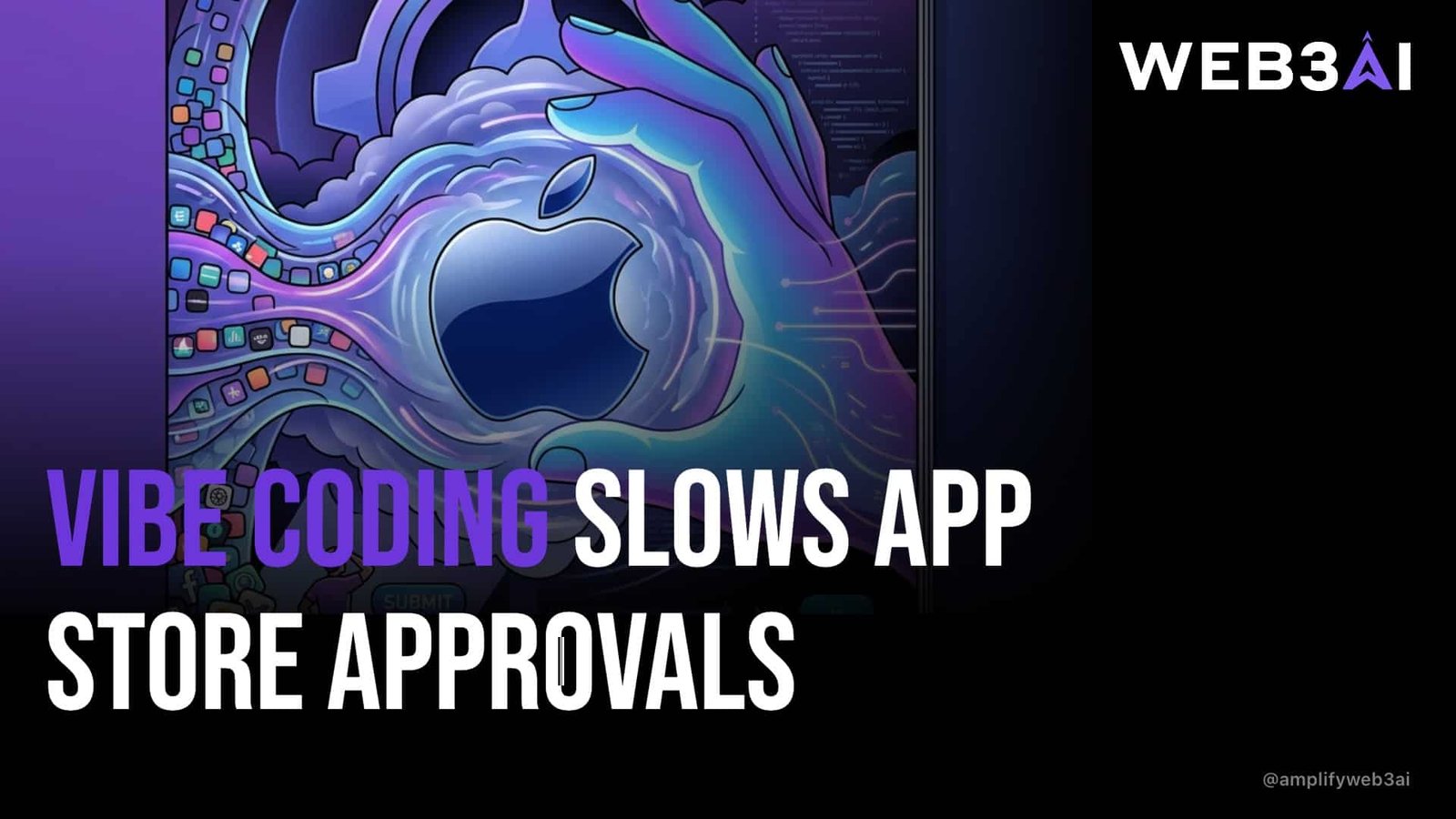

Vibe coding app store approvals are becoming a headline issue in 2025, as AI-assisted development floods platforms like Apple’s App Store with a surge of new submissions that human reviewers are struggling to keep pace with. If you’ve ever waited weeks for an app update to go live, you may already be feeling the downstream effects of a trend that’s reshaping how software gets built — and bottlenecking how it gets published. In this post, we break down what vibe coding actually is, why it’s stressing Apple’s review pipeline, and what it means for developers and creators building in the AI era.
The concept of vibe coding — using AI tools like Cursor, Claude, or GitHub Copilot to generate entire applications with minimal hand-written code — has exploded in popularity throughout 2024 and into 2025. As TechCrunch reported, a new generation of non-traditional developers is emerging, empowered by AI to ship apps they never could have built manually. But that democratization has a cost: the sheer volume of submissions is overwhelming the gatekeepers of the app ecosystem.
This post unpacks the tension between AI-powered creativity and platform quality control — and what savvy builders need to know before hitting “submit” on their next AI-assisted project.
Vibe coding is a term coined by AI researcher Andrej Karpathy to describe the practice of describing what you want an app to do in plain language — and letting an AI model write the actual code. You’re not so much programming as you are directing, reviewing, and iterating on AI output. Think of it less like writing a novel and more like editing one that a very fast, very literal ghostwriter produced overnight.
The appeal is obvious. Tools like Replit, Bolt, Lovable, and v0 have made it possible for entrepreneurs, designers, and even students to go from idea to functioning prototype in hours. The barrier to entry for app development has never been lower. You don’t need a computer science degree, a senior engineer on staff, or months of runway — just a clear idea and an AI model that can interpret it.
But “functioning prototype” and “App Store-ready” are two very different things. Apple’s review process has long been rigorous because the stakes are high — millions of users, financial transactions, and personal data flow through apps every day. When AI generates code, it doesn’t automatically generate the documentation, metadata, privacy policies, and edge-case handling that reviewers expect to see.
Pro Tip: Before submitting any AI-generated app to the App Store, manually review Apple’s App Store Review Guidelines — especially sections on privacy, data collection disclosures, and in-app purchase flows. These are areas where AI-generated code commonly falls short.
According to reporting from Mashable, Apple’s App Store review team has seen a notable uptick in submissions that appear to be AI-generated — many of which arrive with incomplete metadata, templated descriptions, or code patterns that suggest minimal human intervention post-generation. Reviewers have flagged that these submissions often lack clear purpose, contain placeholder text, or fail basic functionality tests. The result? More rejections, more back-and-forth, and longer wait times for everyone — including experienced developers submitting carefully crafted apps.
It’s worth noting that this isn’t just an Apple problem. Google Play and other distribution platforms are grappling with similar dynamics. But Apple’s historically stricter review process makes the bottleneck more visible and more painful for developers who depend on the App Store as their primary distribution channel.
The surge in AI-assisted submissions is also creating a new kind of quality signal noise. Reviewers who once relied on submission patterns to flag bad actors now have to contend with a flood of well-intentioned but poorly prepared AI-generated apps that look suspicious even when they aren’t. That cognitive load slows everyone down.
For creators and indie developers who’ve invested real effort into their builds, the frustration is compounded by the knowledge that the queue is partially clogged by apps that were generated, submitted, and forgotten in the same afternoon.
Here’s the uncomfortable truth about vibe coding: AI is excellent at producing code that works in isolation, but struggles with the holistic, user-centered thinking that makes an app genuinely good. An AI model doesn’t know that your onboarding flow feels confusing to a 50-year-old user, or that your error messages are technically accurate but emotionally alienating. It generates what it’s prompted to generate — and if you don’t know what to ask for, you’ll get a technically functional but experientially hollow product.
Apple’s reviewers are trained to spot exactly these gaps. They test for crashes, inappropriate content, misleading descriptions, and incomplete functionality. When an AI-generated app breezes past those checks on the surface but fails in subtle ways — an in-app purchase that doesn’t restore correctly, a login flow that breaks on older iOS versions — it creates a review cycle that consumes everyone’s time.
This is where understanding AI-generated content at a deeper level becomes critical. If you’re shipping AI-assisted apps, you need to think like a reviewer, not just a builder. That means testing every edge case, writing honest metadata, and ensuring your privacy policy actually reflects what your app does — not what the AI assumed it does.
Pro Tip: Run your AI-generated app through Apple’s TestFlight with at least 10 external testers before submitting for App Store review. Real user feedback will surface issues that automated tools and the original developer almost always miss.
If you’re using vibe coding tools to build your next app, the situation isn’t a reason to stop — it’s a reason to be more intentional. The developers who are thriving in this environment are the ones treating AI as a powerful collaborator rather than a vending machine that dispenses finished products. They’re using AI to accelerate the parts of development that are repetitive and time-consuming, while applying human judgment to the parts that require nuance: UX decisions, privacy architecture, and compliance review.
It’s also worth considering how the broader AI and creator landscape is evolving. As we’ve explored in our piece on the rise of AI-generated content, the platforms that distribute creative and technical work are increasingly having to develop new frameworks for evaluating what “quality” means when AI is in the loop. App stores are just the most concrete and commercially high-stakes example of this broader challenge.
The developers who will win in this environment are those who use AI to go faster without sacrificing the human layer that makes software trustworthy. That’s a skill set, and it can be learned.
Apple has not made an official public statement specifically addressing vibe coding as a category, but the company has updated its App Store Review Guidelines multiple times in recent years in ways that appear designed to address AI-generated submissions. Notably, requirements around app completeness, honest metadata, and functional substantiveness have been tightened — all of which disproportionately affect apps that were generated rapidly without thorough human review.
Industry observers expect Apple to eventually introduce more explicit disclosure requirements around AI-generated code, similar to how the company now requires disclosure of AI-generated content in app descriptions and screenshots. This is consistent with a broader industry trend toward AI provenance transparency that we’re seeing across social media platforms, content marketplaces, and now app stores.
For developers, this means the window to submit under-documented AI-generated apps without friction is closing. Building good habits now — comprehensive testing, honest metadata, clear privacy disclosures — will be far less painful than retrofitting compliance later.
Whether you’re a seasoned developer experimenting with AI assistance or a first-time builder who wrote exactly zero lines of code manually, there are concrete steps you can take to improve your chances of a smooth, fast App Store review. The goal isn’t to game the system — it’s to meet the standard that reviewers are trained to expect.
Following these steps won’t guarantee instant approval, but they will dramatically reduce the back-and-forth that slows down the review process for you and for every other developer in the queue.
These aren’t glamorous steps, but they’re the ones that separate the developers who get through review in 24 hours from the ones who spend two weeks in a rejection loop. For more on how AI and Web3 tools are reshaping the builder ecosystem, see our breakdown of Web3 and AI as a collaborative stack — the same principles of intentional, human-guided AI use apply whether you’re shipping apps or building decentralized products.
Vibe coding is the practice of using AI tools to generate functional application code from natural language descriptions, with minimal traditional programming. It affects app store approvals because the volume of AI-generated submissions has increased dramatically, placing greater strain on review queues. Apps built this way often lack the documentation, testing, and metadata polish that reviewers expect, leading to higher rejection rates and longer wait times for all developers.
Yes, reports from developers and industry observers suggest that Apple App Store review times have been increasingly variable in 2025, with some developers attributing delays to the growing volume of AI-generated submissions clogging the queue. Apple has not officially confirmed this as a cause, but the correlation between the rise of vibe coding tools and slower average review times is hard to ignore. Developers with polished, well-documented submissions are generally still experiencing reasonable review times.
Apple does not currently have a disclosed mechanism for detecting AI-generated code specifically, but reviewers are trained to identify submissions that appear incomplete, templated, or insufficiently tested — all of which are common characteristics of rapidly generated AI apps. The focus is on the quality and completeness of the submission rather than how the code was written. That said, the industry is moving toward greater AI transparency, and explicit disclosure requirements may be coming.
The most common rejection reasons for AI-generated apps include incomplete or inaccurate privacy nutrition labels, broken in-app purchase flows, missing demo account credentials for apps that require login, placeholder or generic content in screenshots and descriptions, and apps that crash or behave unexpectedly on real devices. Most of these are avoidable with thorough manual testing and honest documentation — things AI tools don’t automatically produce.
Using vibe coding responsibly means treating AI as a development accelerator, not a complete replacement for human judgment. Write or carefully edit your own metadata, test your app exhaustively on physical devices, ensure your privacy disclosures are accurate, and review every aspect of your submission against Apple’s guidelines before hitting submit. Developers who combine AI’s speed with their own quality standards are consistently getting through review faster than those who submit AI output with minimal review.
Google Play is facing a similar dynamic, though its review process differs from Apple’s in both speed and methodology. Google relies more heavily on automated systems for initial review, which may catch different types of issues than Apple’s human-led process. As vibe coding continues to grow, both platforms are likely to develop more explicit frameworks for evaluating AI-generated submissions — and developers who adopt quality-first habits now will be better positioned regardless of which platform they target.
Vibe coding app store approvals represent one of the first major real-world friction points where AI’s creative power meets platform accountability — and it’s a moment worth paying close attention to. The tools that let anyone build an app in an afternoon are genuinely transformative, and the developers using them wisely are shipping remarkable products faster than ever before. But the surge in low-effort, under-tested submissions is a reminder that access to powerful tools doesn’t automatically produce quality outcomes. The human layer — thoughtful testing, honest documentation, genuine user empathy — remains irreplaceable, and the platforms that billions of people rely on for software are enforcing that reality through their review processes. Build fast, but build with intention. Explore what we have built at attn.live.