Anouncement

Anouncement
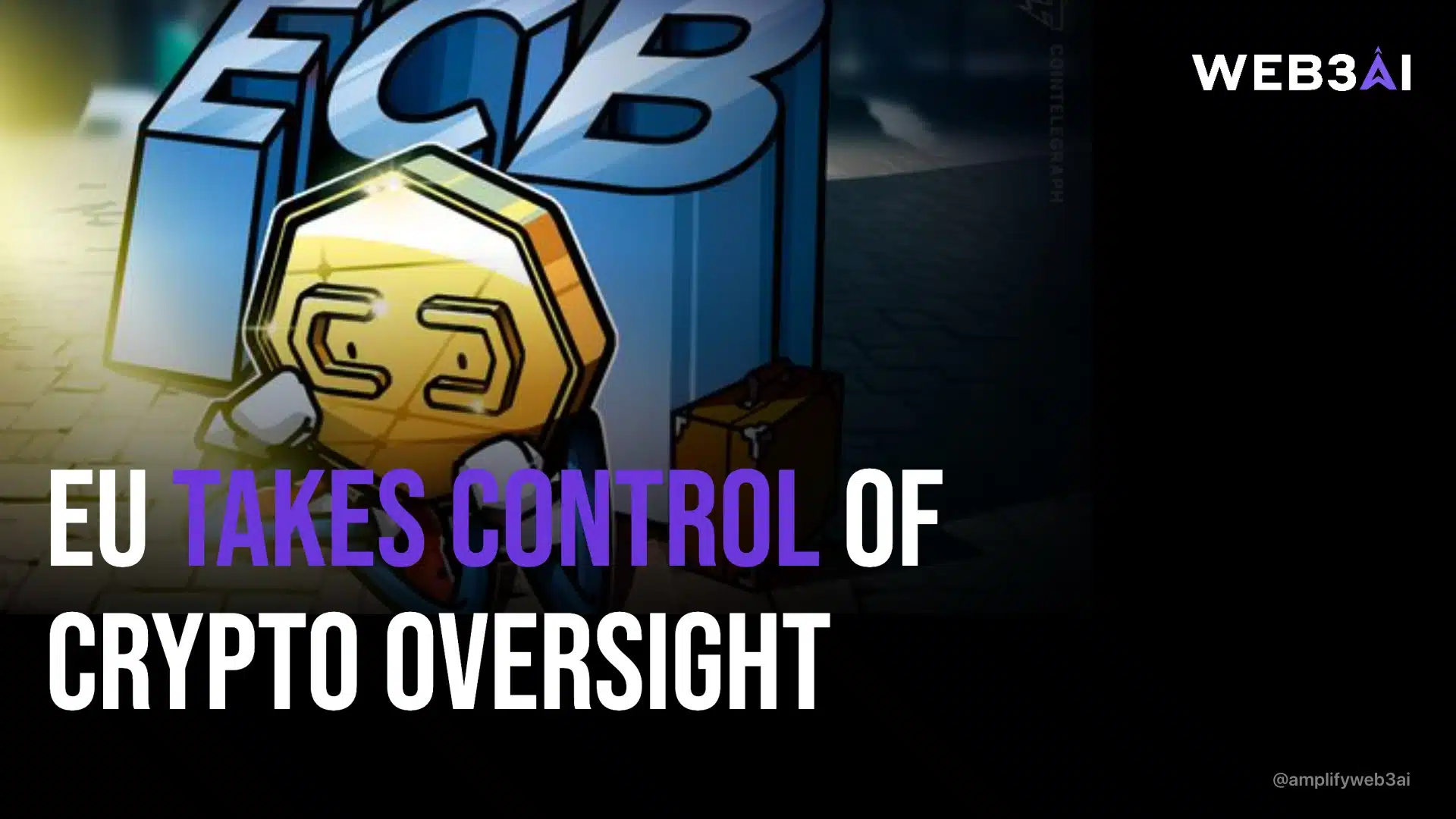

ESMA crypto supervision Europe has moved from a background policy debate to front-page financial news — and if you hold, trade, or build with digital assets, this development touches you directly. The European Central Bank has thrown its weight behind a bold proposal that would hand the European Securities and Markets Authority (ESMA) centralised oversight of crypto markets across the entire EU. That is not a minor tweak to existing rules; it is a structural redesign of how crypto is governed on the continent.
For context, Europe’s Markets in Crypto-Assets regulation (MiCA) already set a global benchmark when it came into full force in late 2024. As Reuters reported in its MiCA explainer, the framework was designed to bring legal clarity to token issuers and crypto-asset service providers — but enforcement was always split across 27 member-state regulators. The ECB’s new backing of ESMA’s expanded role is essentially an admission that fragmented supervision is a vulnerability, not a feature.
In this post, we break down exactly what the ECB is proposing, why ESMA is the chosen vehicle, what it means for crypto businesses and investors, and how you can position yourself ahead of the curve.
The European Central Bank’s argument is straightforward: crypto markets do not respect national borders, so supervisors should not either. In its published opinion, the ECB warned that leaving crypto oversight to individual member states creates regulatory arbitrage — a situation where companies shop for the most lenient jurisdiction inside the EU and operate from there across the whole single market.
The ECB specifically flagged stablecoins and crypto-asset service providers (CASPs) as the highest-risk categories requiring unified oversight. Stablecoins in particular sit at the intersection of payments infrastructure and speculative markets, meaning a failure in one country can ripple through the entire European financial system almost instantly.
The bank also pointed to the sheer complexity of cross-border crypto activity. A token issued in Malta, traded on an exchange headquartered in Lithuania, and held by retail investors in Germany creates a supervisory puzzle that no single national authority is equipped to solve alone. Centralising that function inside ESMA, the ECB argues, is the only logical answer.
Pro Tip: If your crypto project operates across multiple EU member states, start mapping your compliance structure now. When ESMA assumes direct supervision, you will need a single, coherent regulatory relationship — not 27 separate ones.
ESMA is not a newcomer to financial oversight. It already supervises credit rating agencies and trade repositories directly, so the institutional muscle exists. Extending that mandate to crypto-asset service providers would give ESMA the power to license, investigate, and sanction CASPs operating across EU borders — without needing to route enforcement through national bodies.
Under the proposed model, ESMA would become the single point of truth for large-scale or cross-border crypto operators. Smaller, domestically focused providers might retain their national regulator as the primary contact, but any CASP with significant cross-border exposure would report directly to ESMA. This mirrors how the Single Supervisory Mechanism works for large banks under the ECB itself.
The practical implications are significant. Firms would face standardised reporting formats, unified audit requirements, and a single set of conduct-of-business rules. For compliance teams, that actually reduces complexity in the long run — even if the transition period is demanding. For investors, it means stronger, more consistent protections regardless of where they access crypto services within the EU.
Understanding the broader Web3 landscape is essential context here. Our guide on how AI is transforming Web3 marketing explores how technology and regulation are converging to reshape every layer of the digital asset ecosystem — from how projects communicate to how they prove compliance.
MiCA was a landmark achievement precisely because it was the first comprehensive crypto-specific legal framework anywhere in the G20. It established licensing categories, disclosure requirements, and consumer protection rules that gave the industry a clear operating baseline. But MiCA was always a rulebook, not an enforcement engine. That gap is exactly what the ECB-ESMA proposal aims to close.
Think of it this way: MiCA wrote the laws of the road for crypto in Europe. The ESMA centralisation push is about hiring a single national traffic police force rather than leaving every town to enforce the rules however it chooses. The rules stay the same; the consistency of enforcement changes dramatically.
There is also a market integrity dimension that goes beyond consumer protection. The ECB has repeatedly signalled concern about crypto’s potential to destabilise financial markets if it scales without adequate oversight. Centralised ESMA supervision would give regulators a real-time, EU-wide view of market positions, liquidity risks, and systemic exposures — the kind of macroprudential intelligence that simply does not exist today.
For a foundational understanding of how these systems connect, our beginner’s guide to Web3 walks through the core infrastructure that regulators are now working to govern — from blockchain basics to decentralised finance.
For crypto businesses operating in or entering the EU, the direction of travel is now unmistakable: centralised, professional, institutional-grade compliance is the price of admission. That is not necessarily bad news. Regulatory clarity has historically unlocked institutional capital — and institutional capital is what matures a market.
Here is what businesses should be actively assessing right now:
For individual investors, the news is broadly positive. Stronger, more consistent supervision means fewer rogue operators, cleaner markets, and clearer recourse if something goes wrong. The EU is explicitly building a framework where retail participants can engage with crypto with the same confidence they bring to regulated securities markets.
Pro Tip: Investors should check whether their crypto exchange or wallet provider holds a MiCA licence. When ESMA supervision expands, licensed providers will be the ones with clear legal standing — and unlicensed operators may face forced exits from the EU market.
Europe is not acting in a vacuum. The US, UK, Singapore, and the UAE are all advancing their own crypto regulatory frameworks — and the race to set the global standard is intensely competitive. The ECB’s push for ESMA centralisation is partly a defensive move: ensuring that Europe’s framework is robust enough to prevent regulatory arbitrage from outside the bloc, not just within it.
The geopolitical dimension matters too. As crypto infrastructure becomes strategically important — for payments, sanctions compliance, and financial sovereignty — regulators worldwide are realising that light-touch supervision is a national security risk. The ECB has been unusually direct about this, framing crypto supervision not just as consumer protection but as systemic financial stability management.
For Web3 builders and investors watching from outside Europe, the ESMA model is likely to become a template. When the world’s second-largest economic bloc builds a centralised, well-resourced supervisory structure for crypto, other jurisdictions take note. Understanding what Europe is building today means understanding where global crypto regulation is heading tomorrow. Explore how these shifts will reshape the entire sector in our deep-dive on the future of crypto and blockchain.
The ECB’s backing is a significant political signal, but it does not automatically translate into law. Here is the realistic sequence of events that the industry should track:
The window between now and full implementation is precisely where proactive businesses gain a competitive edge. Those who build ESMA-ready compliance frameworks early will spend far less on remediation later — and will be far more attractive to institutional partners and investors who require regulatory certainty.
ESMA crypto supervision Europe refers to a proposed framework in which the European Securities and Markets Authority becomes the centralised regulator for crypto-asset service providers operating across EU member states. It matters because it would replace fragmented national supervision with a single, consistent enforcement body — raising compliance standards and market integrity across the entire single market.
The ECB argues that crypto markets are inherently cross-border and that national regulators cannot effectively supervise them in isolation. It has specifically highlighted regulatory arbitrage and systemic risk from stablecoins as reasons why a centralised EU-level supervisor is necessary. ESMA’s existing institutional infrastructure makes it the natural choice for that role.
MiCA is the legal rulebook — it sets licensing requirements, disclosure obligations, and conduct standards for crypto operators in the EU. ESMA supervision is the enforcement layer on top of those rules. MiCA writes the law; ESMA would become the single authority responsible for ensuring it is applied consistently across all 27 member states.
Crypto-asset service providers with significant cross-border EU activity would be the primary targets for direct ESMA supervision. This includes large exchanges, stablecoin issuers, and custody providers operating in multiple member states. Smaller, domestically focused operators may continue to be supervised by their national competent authority, at least initially.
No firm date has been set. The ECB’s opinion is a policy input, not legislation. A formal Commission proposal, parliamentary review, and transition period would likely push full implementation to 2027 or 2028. However, businesses should begin preparing now, as compliance expectations will be set long before the supervision formally begins.
Investors should verify that their chosen crypto service providers are MiCA-licensed, as unlicensed operators may be forced to exit the EU market as supervision tightens. Staying informed about which exchanges and platforms are engaging constructively with regulators is a practical first step toward protecting your portfolio in a more regulated environment.
ESMA crypto supervision Europe represents the most consequential shift in digital asset governance since MiCA itself. The ECB’s endorsement sends an unambiguous signal: Europe is serious about building a financial system where crypto operates with the same accountability as any other regulated market. For builders, investors, and businesses across the Web3 space, the question is not whether this framework is coming — it is whether you are ready for it when it arrives.
The businesses that treat this moment as a strategic opportunity rather than a compliance burden will be the ones that define the next chapter of European crypto. Centralised, consistent supervision raises the bar — and a higher bar creates a more trustworthy, more liquid, more mature market for everyone. The work you do on your compliance posture today is an investment in your ability to operate with confidence tomorrow.
Explore what we have built at attn.live.