Anouncement

Anouncement
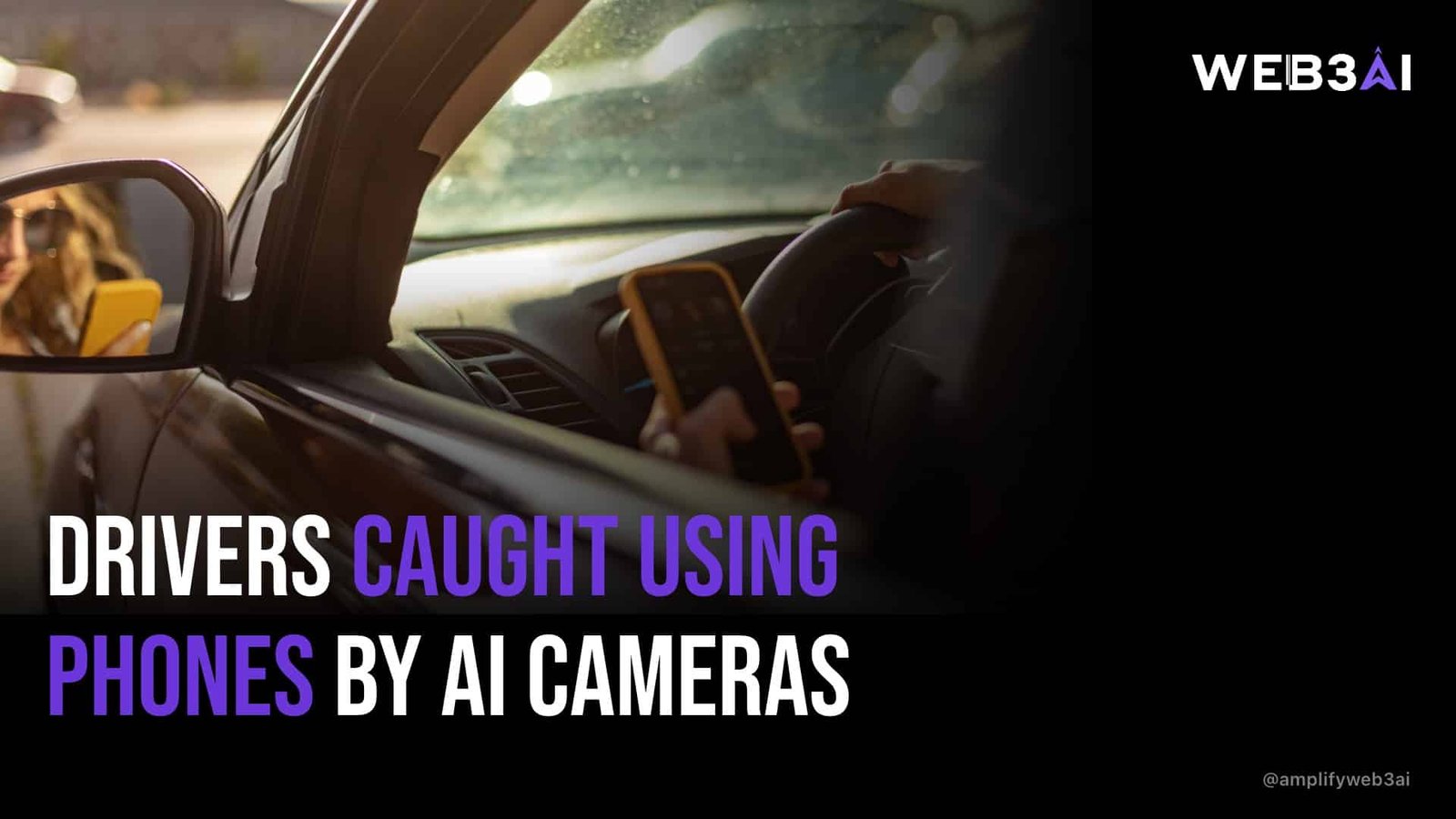

AI cameras catching distracted drivers in highway work zones represent one of the most consequential deployments of artificial intelligence in everyday public life. Construction zones have long been among the most dangerous stretches of road in the United States, where a momentary glance at a phone can cost a worker their life. Now, smart camera systems powered by computer vision are changing the equation — detecting phone use, seatbelt violations, and inattention in real time, often before a human officer would even notice.
According to reporting from Wired, AI-powered traffic enforcement cameras have been rolling out across multiple U.S. states, using machine learning to flag drivers with remarkable accuracy — even at highway speeds. The technology does not simply snap a photo; it analyzes posture, hand positioning, and facial orientation to determine whether a driver is genuinely distracted. This is a meaningful leap beyond traditional speed cameras.
In this post, we break down exactly how these systems work, where they are being deployed, what the data shows about their effectiveness, and what the broader implications are for AI-driven public safety infrastructure.
Work zones are uniquely vulnerable environments. Lanes narrow, speed limits drop, workers stand feet from live traffic, and traffic patterns shift without warning. According to the Federal Highway Administration, there were over 850 work zone fatalities in the United States in a recent reporting year — a figure that has remained stubbornly high despite decades of safety campaigns.
The core problem is not speeding alone. Distracted driving — particularly phone use — is a dominant factor in work zone collisions. A driver traveling at 65 mph covers the length of a football field in roughly four seconds. Four seconds of eyes-off-road is all it takes. Traditional enforcement methods, like posted officers or fixed speed cameras, catch only a fraction of violations and do nothing to detect phone use in real time.
This is the gap that AI camera systems are now designed to fill. By processing video feeds through trained neural networks, these systems can identify phone-holding behavior, flag it automatically, and generate an evidentiary-grade image for review — all within seconds of the violation occurring.
Pro Tip: Work zone speed fines are typically doubled in most U.S. states. Adding AI-enforced phone detection to that same corridor means drivers now face compounding accountability — a strong behavioral deterrent.
The core of these systems is a combination of high-resolution cameras, edge computing hardware, and deep learning models trained on millions of images of drivers. The cameras are typically mounted on overhead gantries or poles positioned to capture a clear downward angle into the vehicle cabin. This angle is deliberate — it gives the AI a direct view of a driver’s hands, lap, and face.
When the system detects a potential violation — say, a driver holding a phone at steering-wheel height — it captures a burst of images and runs them through a classification model. That model has been trained to distinguish between a phone, a coffee cup, a water bottle, and even a dashboard-mounted GPS unit. False positives are filtered out before any image is flagged for human review.
A trained reviewer then confirms the violation before a notice is issued. This human-in-the-loop design is important: it means the AI functions as a force multiplier for enforcement, not a replacement for human judgment. The result is a system that is both faster and more scalable than traditional patrol-based enforcement. If you want a broader picture of how AI is reshaping public infrastructure, our post on how AI is transforming public safety covers the full landscape.
Several states have already moved from pilot programs to active enforcement using AI camera systems in work zones. New York has been among the most aggressive adopters, deploying automated work zone camera programs that have issued hundreds of thousands of violation notices since launch. Maryland, Pennsylvania, and several other states have followed with their own programs, often in partnership with private technology vendors.
Internationally, the United Kingdom, Australia, and New Zealand have deployed similar systems on motorways, with documented reductions in both phone-use violations and collision rates. New South Wales, Australia, reported a 30% reduction in handheld phone detections within 12 months of launching its mobile phone detection camera network. These results have strengthened the case for broader U.S. adoption.
What distinguishes the newest generation of deployments is their portability. Earlier systems required permanent infrastructure. Modern units are trailer-mounted or pole-mounted, can be repositioned to active work zones within hours, and connect via cellular networks — making them as flexible as the construction projects they protect.
The effectiveness data coming out of early deployments is hard to dismiss. In jurisdictions where AI phone-detection cameras have been operating for more than one year, studies consistently show a significant reduction in observed phone use among drivers passing through monitored zones. Behavior change, not just enforcement, is the goal — and it appears to be happening.
One pattern researchers have noted is a “halo effect”: drivers who receive a violation notice in one corridor tend to reduce phone use across their broader driving behavior, not just in camera-equipped zones. This suggests the enforcement is reshaping habit, not just compliance in monitored locations. That is a substantially better outcome than simply writing more tickets.
The privacy conversation is real, however. Critics have raised legitimate questions about data retention, the accuracy of AI models across different demographics, and the potential for mission creep — using work zone cameras to enforce other types of violations beyond their stated mandate. These concerns deserve serious policy attention, not dismissal. Our deep dive into the rise of AI surveillance technology examines exactly these tensions between safety outcomes and civil liberties.
Pro Tip: When evaluating any AI enforcement program, ask three questions: Who owns the data? How long is it retained? And is there an independent audit of the AI model’s accuracy across demographic groups? These are the accountability guardrails that matter most.
Work zone camera enforcement is not happening in isolation. It is part of a broader shift toward intelligent transportation infrastructure — systems where roads, vehicles, and enforcement tools all communicate and respond dynamically. AI cameras are one node in what will eventually become a fully connected traffic safety network.
Some states are already pairing AI camera data with variable message signs, so that flagged violation rates in a given zone can trigger real-time warnings to approaching drivers. Others are integrating camera data into fleet management systems, allowing construction companies to monitor whether their own employees and subcontractors are driving safely near active work sites. These integrations turn a simple camera into a living data stream.
For cities planning the next generation of infrastructure, the connection between AI enforcement tools and broader smart city frameworks is unavoidable. Our post on Web3, AI, and the future of smart cities explores how decentralized data ownership models could give citizens more control over exactly these kinds of systems.
Modern systems use deep learning models trained on millions of classified images to distinguish phones from common objects like cups, sunglasses, and dashboard mounts. The models analyze object shape, orientation, and the driver’s hand and eye positioning together. When confidence is below a threshold, the image is discarded rather than escalated — reducing false positives significantly.
Enforceability depends on state legislation. States like New York have passed specific laws authorizing automated work zone camera programs, including phone detection. Each violation is reviewed by a trained human operator before a notice is issued, which satisfies due process requirements in most jurisdictions. Drivers typically have an appeals process available.
Footage handling varies by program and vendor. In well-designed systems, only flagged images are retained — non-violation footage is discarded at the edge before it is ever transmitted. Retained images are typically held for a defined period to support appeals, then deleted. Advocates recommend statutory limits on retention and independent audits to enforce compliance.
Evidence from jurisdictions with multi-year programs suggests genuine behavior change does occur. Studies from New South Wales and New York show reduced observed phone use in monitored corridors over time, including among repeat drivers. The halo effect — where drivers reduce phone use beyond monitored zones — is an encouraging indicator that behavior, not just compliance, is shifting.
The main concerns center on privacy, algorithmic bias, and mission creep. Privacy advocates question long-term data retention and potential secondary uses of footage. Researchers have flagged that some AI models perform less accurately across different demographic groups, which raises fairness concerns. Mission creep — using work zone cameras to enforce violations beyond their original mandate — is also a legitimate governance risk that requires clear statutory guardrails.
AI cameras catching distracted drivers in work zones are not a future concept — they are an active, expanding reality reshaping how road safety is enforced today. The technology works, the data supports broader deployment, and the lives saved are not hypothetical. Construction workers go home safely because a driver received a notice and changed their behavior. That is a tangible outcome worth taking seriously.
The challenge ahead is not technical. It is governance. Getting the policy frameworks right — on data retention, demographic fairness, transparency, and accountability — will determine whether this technology earns and keeps public trust. The tools are ready. The question is whether the institutions deploying them are equally prepared to use them responsibly.
As AI continues to embed itself into physical infrastructure, the platforms and communities that understand this shift earliest will be best positioned to shape it. Explore what we have built at attn.live.