Anouncement

Anouncement

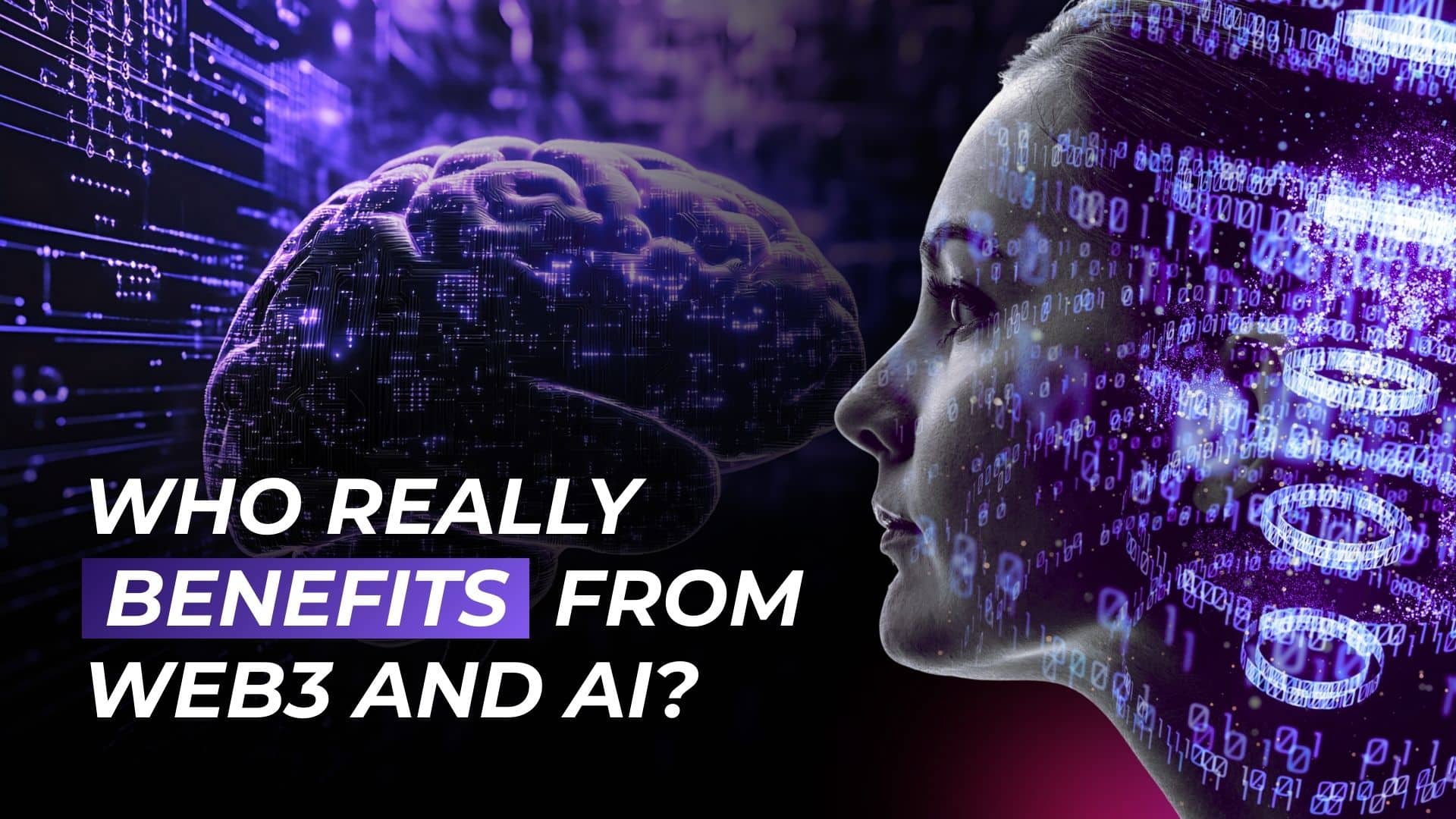
When people hear about Web3 and AI, a few questions come up again and again.
Is Web3 the same thing as AI?
Do I need to understand both?
Why do these two things always seem to show up together?
And usually, underneath all of those questions is something much simpler:
Why does this all feel like so much?
If you’ve ever felt that way, you’re not alone. Most people aren’t overwhelmed because Web3 or AI are impossible to understand. They’re overwhelmed because these ideas are often introduced with speed, pressure, and very little context.
So let’s slow this down.
This article is about how Web3 and AI actually work together — and why understanding that relationship can make everything feel calmer, clearer, and far less intimidating.
Web3 and AI are not the same thing.
They solve different problems and were created for different reasons.
AI is mostly about:
It’s designed to analyze patterns, generate outputs, and help humans do certain tasks faster or at scale.
Web3, on the other hand, is mostly about:
It’s concerned with who owns digital assets, who controls systems, and how power is distributed online.
Here’s the key idea that makes everything click:
When Web3 and AI are combined thoughtfully, they balance each other.
One adds capability.
The other adds structure.
And that balance matters more than most people realize.
Let’s use an analogy.
Imagine AI as a very fast assistant.
This assistant can:
It’s efficient. It’s powerful. And it moves quickly.
Now imagine Web3 as the rules of the room.
The rules determine:
In this room, AI can act — but Web3 helps define where, how, and for whom that action happens.
Without rules, intelligence can be misused.
Without intelligence, rules don’t do much on their own.
This is why these two technologies are often discussed together. Not because they’re the same — but because one without the other creates imbalance.
AI is becoming more powerful very quickly.
And whenever power increases — whether it’s technological, economic, or social — one question always follows:
Who controls it?
That’s where Web3 enters the conversation.
Web3 introduces ideas like:
These ideas help us ask important questions, such as:
These aren’t technical questions.
They’re human questions.
They’re about fairness, responsibility, and agency — and they affect people whether or not they ever touch a line of code.
A lot of confusion happens because Web3 and AI are usually explained in isolation.
AI is often talked about in terms of:
Web3 is often talked about in terms of:
But when you zoom out, both are really about power.
AI concentrates power through intelligence and automation.
Web3 tries to distribute power through structure and ownership.
That tension is not a flaw. When handled well, it’s actually healthy.
It forces us to slow down and ask better questions instead of rushing forward blindly.
You don’t need to understand blockchains or machine learning to see how this plays out in real life.
Think about creative work.
If AI helps generate music, art, or writing:
Web3 introduces ownership questions.
AI introduces efficiency and scale.
Now think about digital identity.
If AI systems help make decisions about people — from hiring to access to services:
Again, Web3 asks ownership and accountability questions.
AI introduces automation.
Or think about labor.
When automation assists or replaces certain tasks:
Together, Web3 and AI force society to think more carefully about fairness and responsibility, not just innovation.
You don’t need to build with Web3 or AI for this to affect your life.
These technologies already influence:
Understanding the relationship between Web3 and AI helps you:
Knowledge creates steadiness.
And steadiness is what allows you to make thoughtful choices — whether that means engaging deeply, lightly, or not at all.
Instead of asking:
“Do I need to learn Web3 and AI?”
Try asking:
“What kind of future do I want to participate in?”
That question shifts everything.
You don’t need to rush into tools.
You don’t need to adopt anything immediately.
You don’t need to prove that you’re “keeping up.”
Understanding the ideas comes first.
Participation can come later — or not at all.
And both choices are valid.
I talked about Web3 and AI together on purpose.
Separately, they can feel overwhelming and fragmented.
Together, they create a more complete picture.
One is about capability.
One is about responsibility.
And human judgment sits in the middle.
That’s where discernment lives.
That’s where values matter.
That’s where meaningful decisions are made.
If this article helped something click — even just a little — you’re exactly where you need to be.
You don’t need to predict the future.
You don’t need to master everything.
You just need enough understanding to move through this moment without fear or pressure.
Stay curious.
Stay grounded.
And most importantly — stay human.