Anouncement

Anouncement


In an era defined by the rapid-fire evolution of Web3 and Artificial Intelligence, the greatest challenge we face isn’t a lack of information, it’s a lack of clarity. We are currently living through what many call the “Fourth Industrial Revolution,” a period where the barrier between the physical and digital worlds is blurring. But as the pace of innovation accelerates, our ability to process that change often lags behind.
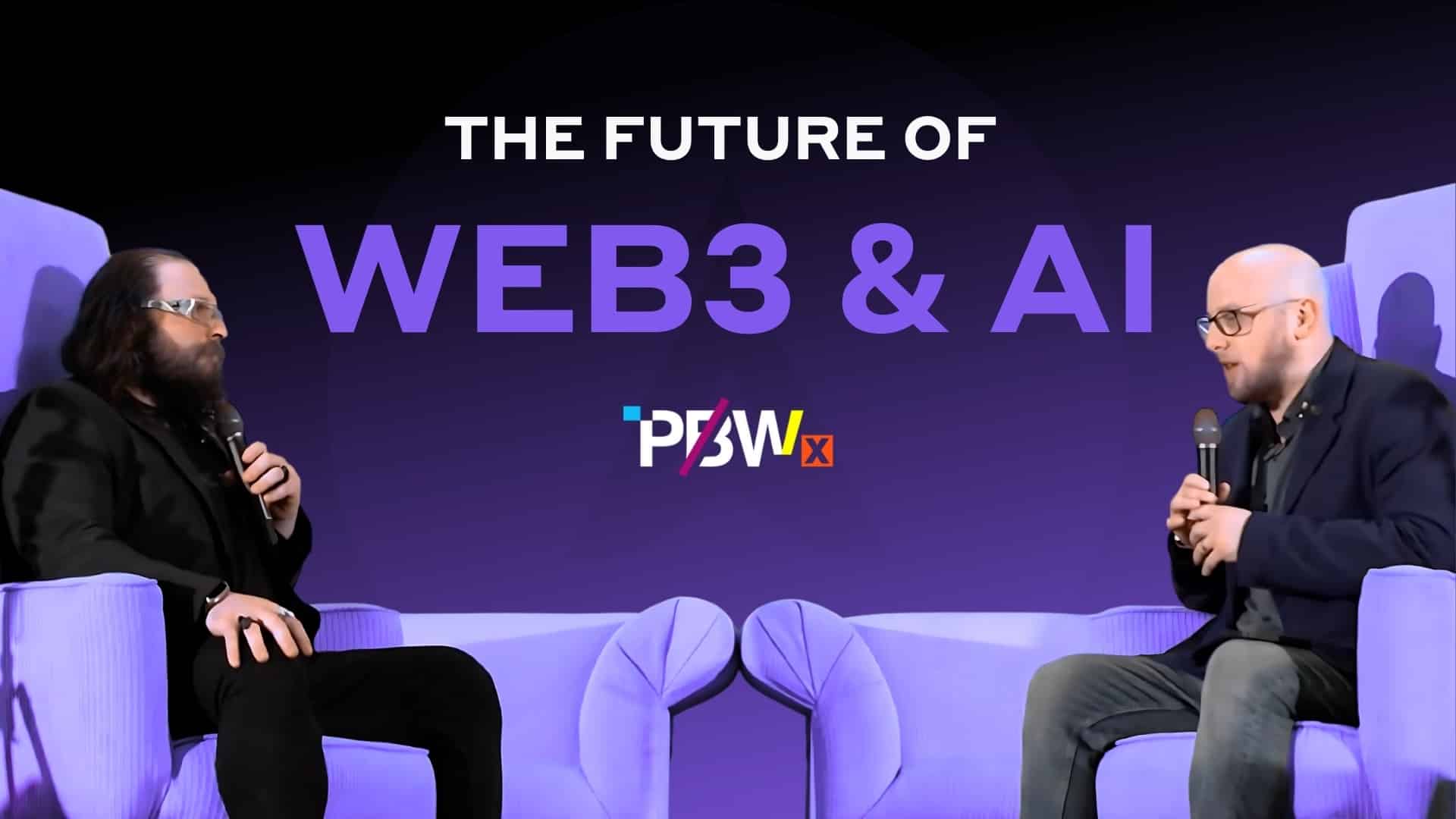
In Episode 9 of the Web3 and AI Made Simple podcast, I dive deep into the cognitive frameworks necessary to survive and thrive in this high-velocity environment. The episode serves as a manifesto for the modern professional, the creator, and the technologist alike. How do we distinguish between a passing fad and a foundational shift? How do we maintain our focus when every week brings a new “game-changing” tool?
Here is an expanded, comprehensive guide to thinking clearly, staying grounded, and making better decisions in the age of AI and Web3.
One of the primary hurdles to clear thinking today is the sheer volume of options. In the tech world, we are constantly bombarded with new platforms: decentralized finance (DeFi) protocols, generative AI models, L2 scaling solutions, and autonomous agents. Every day, a new “essential” tool appears on our feeds, promising to revolutionize our productivity or our portfolios.
When we are presented with too many choices, our brains often default to “analysis paralysis.” This is a state where the cost of making a decision feels so high—because of the potential for missed opportunity—that we fail to make any meaningful progress at all. We become “collectors” of tools rather than “users” of them.
The Strategy: To think clearly, you must move from a mindset of accumulation to a mindset of curation. Instead of trying to learn every new language or every new AI plugin, identify the “First Principles” of the technology. First-principles thinking involves breaking a concept down to its fundamental truths. If you understand the core logic of a blockchain (decentralized ledgers) or the fundamental way of a Large Language Model (statistical probability of tokens), you don’t need to chase every new headline. The specifics of the interface may change, but the principles remain the same. Clarity begins when you stop looking at the surface and start looking at the foundation.
The tech industry is notorious for “hype cycles.” We saw it with the initial NFT craze, and we are seeing it now with certain sectors of AI. In these cycles, the noise marketing fluff, speculative trading, and “vaporware” often drowns out the signal of actual utility, sustainable growth, and genuine innovation.
I discussed the importance of asking a simple, yet profound question to cut through this noise: “What problem does this actually solve?”
Many projects in the Web3 and AI space are “solutions in search of a problem.” They use complex technology to solve tasks that were already handled efficiently by simpler means.
When evaluating new tech, ignore the price action and the influencers. Look for the “Proof of Value.” Ask yourself: if the hype disappeared tomorrow, would this tool still be useful? If a technology doesn’t make a process faster, cheaper, more transparent, or more accessible, it’s likely noise.
To think clearly about the future, we have to understand the symbiotic relationship between Web3 and AI. Many observers view these as competing trends, but I pointed out that they are two sides of the same coin in the next evolution of the internet.
Without Web3, AI risks becoming a centralized black box controlled by a few massive corporations. Without AI, Web3 can feel stagnant or difficult to use for the average person. By viewing these technologies as a unified ecosystem, your “mental map” of the tech world becomes much simpler. You begin to see how decentralized identity can solve the looming crisis of AI deepfakes, or how AI can optimize the efficiency of smart contracts. This holistic view is the hallmark of a clear thinker; it allows you to see the “big picture” while others are stuck in the details.
We often think of technology as a purely logical field, but our reactions to it are deeply emotional. Fear of being replaced by AI or the greed triggered by a crypto bull market are the ultimate enemies of clarity. When we are in a state of high emotional arousal—whether it’s “FOMO” (Fear Of Missing Out) or “FOBLB” (Fear Of Being Left Behind)—our prefrontal cortex, the part of the brain responsible for rational decision-making, essentially shuts down.
Episode 9 emphasizes the need for “Emotional Intelligence” (EQ) in tech. When you feel a sudden, urgent pressure to jump into a trade or implement a new software because “everyone else is doing it,” that is your cue to step back. Clear thinking happens in a state of calm, detached observation.
Practical Tip: Practice “Digital Fasting.” Take intentional, scheduled breaks from social media and tech news feeds. This allows your brain to move from “reactive mode” (responding to pings, alerts, and headlines) to “reflective mode” (connecting dots and thinking long-term). Clarity is found in the silence between the pings.
In a world moving at “light speed,” you cannot rely on your biological memory to keep up. To think clearly, you need a system to capture, organize, and retrieve information. This is often referred to as a “Second Brain.”
Whether you use Notion, Obsidian, Tana, or a simple physical notebook, your goal is to create a repository of insights. When you encounter a complex concept in Web3—like “Zero-Knowledge Proofs” or “Liquidity Pools”—don’t just read about it and move on. Summarize it in your own words, find a real-world analogy, and store it.
Over time, these notes become a personalized knowledge base. This allows you to perform “combinatorial creativity”—the act of taking an idea from the AI world and applying it to a Web3 problem. If you don’t document your learning, you are forced to relearn the same concepts every time they trend again, which is a massive waste of cognitive energy.
One of the most difficult parts of thinking clearly in tech is that what was true three years ago might be obsolete today. In the traditional world, experience is often synonymous with knowing the answers. In the tech world, experience is the ability to ask the right questions while being willing to let go of old answers.
If you are still looking at the internet through the lens of Web2—characterized by centralized silos, data harvesting, and gatekeepers—you will struggle to understand the value proposition of Web3. You must be willing to “unlearn” the old rules of middle-men to see the potential of a peer-to-peer economy. Similarly, if you view AI as just a “better search engine,” you miss its potential as a collaborative partner. Clear thinkers are those who can perform a “factory reset” on their assumptions when the data changes.
As I frequently note, behind every line of code, every neural network, and every decentralized protocol is a human being. Technologies change, but human psychology—our desire for connection, security, and autonomy—remains relatively constant.
If you find yourself overwhelmed by technical complexity, shift your focus back to the human impact.
When you anchor your thinking in human needs and ethical considerations, the “tech” becomes a secondary, more manageable tool rather than an intimidating, abstract force. A clear thinker asks not just “Can we build this?” but “Should we build this, and whom does it serve?”
Most people in the tech space are focused on the next 24 hours, the next “pump,” or the next product launch. Clear thinkers, however, focus on the next decade.
In Web3 and AI Made Simple, the message is clear: The “get rich quick” schemes of the past are distractions that cloud your judgment. The real wealth—both intellectual and financial—is built by those who understand the long-term structural changes happening in our society.
Apply the “10-Year Test” to your thoughts. Ask yourself: Where will AI be in 10 years? How will the concept of digital ownership have evolved by then? When you think in decades, the daily fluctuations of the market or the weekly “breaking news” stories lose their power to stress you out. You become a “marathon runner” in a world of “sprinters.”
Finally, clear thinking is rarely a solo sport. We are the average of the five people we spend the most time with, and in the digital world, this includes the digital communities we join. To maintain clarity, you must surround yourself with people who challenge your biases rather than reinforce them.
Seek out communities that value “Truth-Seeking” over “Tribalism.” In many tech circles, people become “maxis”—maximalists who believe their chosen technology is the only one that matters. This is the opposite of clear thinking. A clear thinker stays curious and remains open to the possibility that they might be wrong. By engaging with a diverse community of thinkers—like those in my ecosystem—you gain access to “distributed intelligence” that helps you see your own blind spots.
In a world that is moving faster than ever, the ability to think clearly is no longer just a luxury or an advantage—it is a necessity for survival. It requires the discipline to filter information, the courage to unlearn outdated ideas, and the wisdom to focus on what truly matters.
As we navigate the complexities of Web3 and AI, remember that you are the pilot, not the passenger. You have the power to choose which information you consume, which tools you adopt, and which future you want to build. By applying the frameworks discussed in Episode 9, you can move past the confusion and step into a future where you are not just keeping up with tech, but leading the way with purpose and precision.
Don’t forget to visit my YouTube channel for a full video of Episode 9. Always remember, stay curious, stay grounded and stay human.