Anouncement

Anouncement
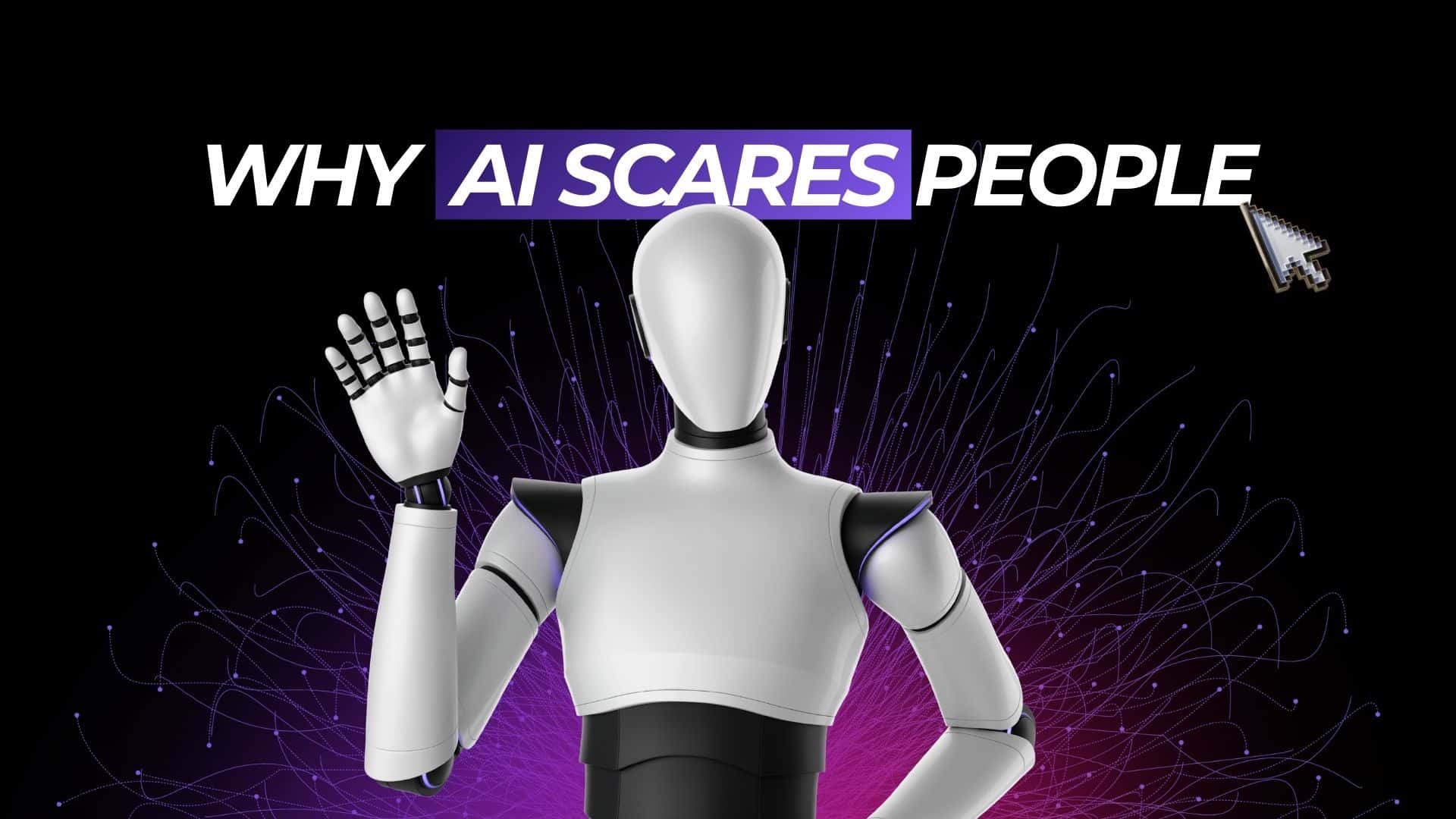

Artificial Intelligence is everywhere.
It shows up in conversations, headlines, workplaces, schools, and creative spaces. And yet, for many people, the first feeling that comes up when they hear “AI” isn’t excitement — it’s unease.
Fear, discomfort, confusion, or the sense that things are moving too fast.
If that sounds familiar, I want to start by saying this clearly:
That reaction is completely human.
Most people are not afraid of AI because they understand it too well. They’re afraid because they don’t feel oriented. And when humans don’t feel oriented, the mind fills in the gaps — often with worst-case scenarios.
This article is not here to convince you to love AI.
It’s not here to dismiss real concerns either.
It’s here to slow the conversation down and explore why AI scares people — and which fears actually deserve our attention.
When people talk about being afraid of AI, they often say things like:
What’s interesting is that these fears rarely come from deep technical knowledge. They come from speed without explanation.
Technology has a history of moving faster than public understanding. And when explanations are rushed, vague, or framed around urgency, fear fills the gap.
Fear is not a sign of ignorance.
It’s a sign that people feel excluded from understanding.
One of the most helpful ways to understand AI is through a very simple analogy.
Think of AI like a power tool.
A power drill, for example.
In the hands of someone trained, careful, and intentional, it:
In the hands of someone careless, rushed, or untrained, it can:
The danger isn’t the tool itself.
The danger is how it’s used — and by whom.
AI works the same way.
AI amplifies intention.
It does not replace judgment.
This distinction matters, because much of the fear around AI comes from imagining the tool acting independently of human decision-making.
When you listen closely, most fears about AI fall into a few human categories:
People worry that decisions will be made without them — by systems they don’t understand or can’t question.
There’s anxiety around work, creativity, and value. If a machine can do something faster, where does that leave humans?
AI can influence what people see, read, and believe. That power, when opaque, feels threatening.
Many people feel like they’re already late — and that sense of urgency creates stress, not clarity.
None of these fears are irrational.
They are responses to rapid change without grounding.
Not all AI fears are exaggerated. Some concerns are very real — and deserve careful attention.
One valid concern is how AI is used in decision-making, especially when humans step back too far.
AI systems can assist judgment, but when judgment is fully outsourced, problems arise. Context, ethics, and nuance are human responsibilities.
AI systems learn from data. If that data is biased, misused, or collected without consent, harm can occur.
Questions about who owns data, how it’s used, and who is accountable are not abstract. They affect real people.
Another valid concern is over-trusting outputs.
AI can sound confident while being wrong. When people stop questioning results and start accepting them blindly, critical thinking erodes.
AI should support human thinking — not replace it.
Some fears around AI are fueled more by headlines than reality.
Ideas like:
These narratives make compelling stories, but they don’t reflect how AI actually works today.
AI does not have:
Humans still decide how AI is built, deployed, regulated, and used.
Fear grows when these distinctions are blurred.
This is one of the most grounding truths about AI:
AI struggles with what makes us human.
It doesn’t truly understand:
Those things don’t come from data.
They come from lived experience.
The future is not about humans versus AI.
It’s about humans staying present while using tools responsibly.
If AI makes you uneasy, you don’t need to reject it — and you don’t need to embrace it blindly either.
You’re allowed to:
Understanding removes fear.
Urgency amplifies it.
There is no deadline for becoming informed.
Fear makes people reactive.
Understanding makes people grounded.
When conversations about AI happen in panic, people feel small and powerless. When they happen in clarity, people regain agency.
Technology should never make you feel less human.
You don’t need to predict the future of AI.
You don’t need to master every tool.
You just need enough understanding to stay grounded in the present — and enough confidence to make your own choices.
That’s what calm clarity creates.
Stay curious.
Stay grounded.
And most importantly — stay human.